BC Becky

Never Thought I'd Want to be a Breast Cancer Survivor

Category: Emotional Journey

  • My paradoxical future

    My paradoxical future

    I’ve been struggling a little lately with this thought – how do I envision my future? When I was diagnosed with cancer, I had a clear sense of what I no longer wanted to do. I was blessed with the ability to forget about sunk costs, and just make decisions based upon what I wanted to do during the times when I was not sick or in treatment. Between all the doctors appointments and chemo nausea, I spent time focusing on daily exercise, reading books I wanted to read, and doing things I enjoyed (e.g. camping, sailing).

    Now that I’m two years post treatment I find myself struggling to figure out how much I should be planning for the future. I worry about getting old and not have access to healthcare, but then I think, maybe I won’t get old, so why worry. I know that sounds kind of morbid, but there is a reality in it.

    I often ask myself “If I only had 5 years to live, is this what I would like to be doing?” (I thought I had written about that before, but I cannot seem to find that post). What I am wondering right now is why is what I’m feeling today different from what I was feeling when I wrote that blog posts (or didn’t write it!).

    I’m feeling paradoxical about my future. Part of me is optimistic. I want to plan for a future that has me getting healthier and having the flexibility to do what I want. I want to plan for a future where we have the financial stability necessary to enjoy life without feeling the need to work. And wouldn’t it be nice to know we had access to healthcare as we aged?

    Then I find myself wonder, “if I only had 5 years …” and I’m thinking, why I am wasting my time with working (really it is why I am encouraging Scott to keep working), and why don’t we just quit everything and travel and enjoy ourselves. Why not forget that we might have a future, and live life to the fullest right now? Will I end up regretting not taking more time to have fun?

    Part of the challenge is, that when you are in that window of “if I only had 5 years…” chances are you are also too sick to enjoy it. The reason you only have five years is because you are sick. And that sick takes away your ability to really do those things that you want to do, so you need to do them while you are healthy enough to do them, but when you are healthy enough to do them your life is so focused on the future.

    I recall one of my epiphanies from our time at Commonweal, was the concept of a fantasy future. In many ways, we needed to grieve the loss of a future that was never going to be anyways. That future that I lost was one where we were health and grew old together. It wasn’t a realistic view of the future. I knew that at some time or another something would happen to make one or both of us not healthy. We decided to go on our 16-month bike trip when we did in part because I felt like it was really a “now or never” kind of thing. I didn’t see myself getting healthier in the future. Boy am I glad we did that!

    And so, I’m back into that paradoxical thinking. I have a desire to both plan for a long future and I’m feeling the need to seize the day.

    For my readers that have deal with critical illness, how do you approach the paradox of planning for a long future and seizing the day?

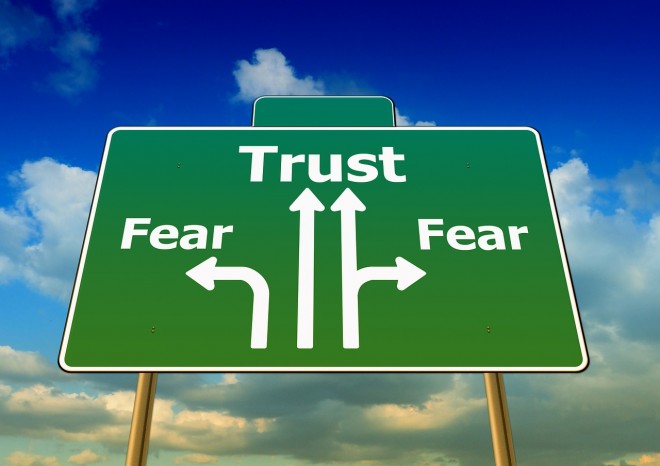
    Feature image CC0 via Pixabay.

  • The Cost of Appearances

    In reading the chapter ‘The Cost of Appearances’ in Arthur Frank’s (1991) At the Will of the Body, reminded me of my first Doxorubicin (Adriamycin other wise referred to as A chemo) chemotherapy injection. I wrote about the experience very briefly in a post The First Day Of Chemo on my blog. In my blog post, I failed to mention two things.

    The first reflection was that my husband wasn’t with me when the nurse came to give me that particular infusion. The social worker had come for a visit and my husband went off to talk to her. Somehow, with four AC chemo infusions, my husband was not there for any of the A injections. Doxorubicin is pushed into the veins by the chemo nurse. The rate of injection is closely controlled and the patient is monitored closely throughout. For me, the process took about 10 minutes, as I didn’t have any immediate problems with it. Some people experience immediate heart issues, which is what the nurses are watching for.

    The second reflection was that up until the point of the A infusion I was doing fine. I had taken some premeds (mostly pill form steroids) and had a saline drip running through the hose that led to my port. When the nurse came with syringes filled with the ‘red devil’, which is what Doxorubicin is often called because of it is red, I was hit with an intense emotion. I began to cry. Immediately the nurse drew the curtain. This is what I was remembering when I read the chapter on ‘The Cost of Appearances’.

    Even though emotions are allowed to happen, and respected, they are also hidden. In the shared infusion space, if the person is happy and chipper the curtains remain open. The room is a large space shared by several other people also going through infusions. But the moment you start to have an emotion that is seen to be negative, the curtain is drawn. You are ‘given your privacy’ but this is more about being hidden from the others in the room. Negative emotions are not allowed to be shared in the communal space – you are only allowed to share the positive emotions.

    This need to only share the positive means that patients feel the need to always be putting on a positive face. It denies them the opportunity to express the true emotions that they may be feeling. Sure, there were times when I was genuinely in a chipper mood. Most of the time my outward emotions echoed my inner emotions – but there were other times when I was scared and yet the fear was not validated. Expressing it was hidden from others, such that others who may be experiencing the same fear are not permitted to see that it is normal – that others have that feeling too.

    It seems to me that today I am hearing more about the lack of validation of feelings. Beth also blogged about it today in her post I bet you are glad you beat cancer. Fortunately, for the most part my care team does validate my experience. I blogged about my recent oncology appointment, where my oncologist validated that my crazy hormonal mood swings were real side effects, and we put a plan in place to do something about it. The validation alone made me feel a lot better.

  • Selfishness to reduce stress

    Selfishness to reduce stress

    I took advantage of some spare time between appointments today to go for a walking along a lovely creek trail. I was struck by the beauty but also the sense of peace associated with the tall trees and the green around me. I noticed pretty purple spring flowers that are now in bloom. With all the water this winter, the hills are alive with green foliage. It is beautiful.

    I’ve been rather stressed lately with the worry of what is happening here in the US. I’ve been worried about what will happen to so many of my friends if the ACA is repealed without a plan to cover pre-existing conditions. I’m also worried about life-time maximums. I have too many friends who are undergoing really expensive life-sustaining cancer treatments. Lifetime maximums would be a death sentence for them. This has been weighing heavily on me.

    I am someone who sees the big picture. I find it frustrating when I see people making decisions based upon themselves, without any consideration for the bigger picture.

    But, what occurred to me while walking, is that I’m carrying a lot of stress that isn’t about me – and that isn’t good for me. I know it sounds selfish, and it is selfish, but I need to be selfish for the sake of my health. Not being selfish is causing me to carry a lot of stress that isn’t good.

    I am aware of my privilege, but today I found myself taking stalk of it. I am a white well-educated Canadian. My husband has a good paying job, with good health insurance. He is not likely to lose his job, and if he did, we could pack up and move back to Canada. If I chose to cross the boarder today for any reason, the likelihood of me being subjected to an invasive search by US Border Patrol upon my return is minimal – because I am a white Canadian who was born in Canada.

    The things that have been causing me a lot of stress lately don’t directly affect me. Now, I have some things that are causing me stress that do affect me (like my health, back pain, risk of recurrence), but I also have a lot of things that are causing me stress that don’t directly affect me (crossing borders, healthcare costs, insurance, …).

    While walking today I realized that I need to let go of the stress associated with things that don’t affect me. I can be bothered by them, yes, but I should not hold onto that unhealthy stress. It is not something I can do anything about. I remind myself that we would not be living here if my husband’s employment did not include adequate healthcare. That was part of the deal when we moved here. If the situation were to change tomorrow, we have options.

    It feels selfish to let go of the stress, but I also know that it is not serving me well. The world is gaining nothing by me taking on stress over things that I cannot control. And so, selfish as it might be, I’m going to try to let go of it. I will hold onto good stress – stress that helps me be a better person, but not futile stress – stress that I cannot do anything about. I will try to enjoy more the beauty around me. It is a beautiful spring day in California after all.

  • Letting go of at least some of the fear

    It feels good when your oncologist acknowledges that what you are feeling is real. Today, I had a six month oncology follow up. This is the first time I’ve gone a full six months without seeing my oncologist. It was a bit of a break through. That being said, for the last two to three weeks, I’ve been having Lupron woes. I’ve found myself overly moody and especially cranky/angry at things that really shouldn’t bother me. It was becoming rather problematic. I’m really glad that when I mentioned it, my oncologist acknowledged that what I was feeling was real, and it was something that we could/should do something about. And so, we’ve moved my Lupron shots to every 2.5 months rather than 3 months. We’ll see if that helps to even out the mood swings/hot flashes at the end of each cycle. If not, there are other options.

    We also chatted about Aromatase Inhibitors (AIs). There is a theory that I should also be taking one. I stopped taking them 6 months ago because I was feeling horrible and couldn’t figure out the cause. I had a weird ear popping sensation that now I know was related to blood pressure meds, but at the time I thought it was that AI. My oncologist suggested that it was my choice – that if the side effects where too problematic, that the added benefit (beyond the Lupron) might not be worth it. I don’t recall side effects being too bad, as the main issue I had was related to my blood pressure meds. So, I’ll try again when I don’t have too much happening. The big concern for me is the bone/joint pain. If the AI increases pain, then it becomes not worth it. I’m already struggling with back pain, so I don’t want to add anything that will increase it. What I find particularly interesting is that for the first time I’m making decisions not out of fear. In that, I am deciding about the AI without feeling like it is a “safety net” that I need. It might help, but I’m also open to the idea that if the side effects suck too much that I am OK with not taking it.

    The not so great news was around likelihood of recurrence. Now truthfully, there is no real way to know. My cancer was pretty unique. That being said, my oncologist sees a lot of people, so I trust that he has a good sense. I finally got up the courage to ask – it wasn’t easy. I’ve wanted to know for a long time, but I just couldn’t ask. I had hoped that I would hear that I was in the group of women who have a greater than 95% survival rate. Unfortunately, that wasn’t the number that he through out. He commented that with ER/PR+ the recurrence rate doesn’t peak at any point, rather it is pretty steady for the first 11 years before it drops off. Then when I asked he through out the number 20-30%. That is actually the pretty standard number, but not the one I was hoping for. I was hoping that because there are others with much higher recurrence risk, that my number would be lower. It certainly causes a moment of pause. And so, with that, I will plod along reminding myself to take one day at a time and reminding myself to keep truly living rather then dwelling on what the future may hold.

  • Feelings of health

    As my health improves, I am struck by feelings of fear that the cancer has returned. It is a total juxtaposition – the idea that feeling healthy is a sign of sickness.

    I discussed this with my therapist the other day. She commented to me that breast cancer, unlike many other cancers, creates this juxtaposition, because early stage breast cancer only appears in the breasts. Those who have it often don’t feel sick in any way. This is in part of why the diagnosis is such a shock when it comes – because you are not feeling sick.

    Before treatment started, I blogged about how I felt stronger than ever, and as a results was associating the sickness with the treatment not the disease. I remember being angry about it. At the time, I didn’t see the other side of that coin – the association of wellness with the disease.

    So now I’m working on the other side. I’m trying to allow myself to both feel well and not have cancer. I find myself wondering if my body is making up aches and pains so that I don’t have that wellness feeling that I had when I was diagnosed. That or I’m just remembering wrong. Maybe I did have body pains before cancer, and I don’t remember it because in my mind I was doing really well before cancer.

    I do hope that some day this fades away.

  • End of Life Options Act

    The End of Life Options Act is the State of California’s death with dignity legislation. It allows mentally competent adults with a terminal illness, such as metastatic breast cancer, to gain access to medications that help them choose the time and situation of their deaths. The website I’ve linked to above includes all the forms provided by the government, to help both patients and physicians make informed decisions and navigate the new legislation.

    Today was an emotionally difficult, but important, day. It wasn’t about me – I don’t have metastatic breast cancer. As far we know, my cancer was treated. My friend, however, a 45-year old mother of two (her youngest being 10 years old) isn’t so lucky. She was diagnosed with metastatic breast cancer about 3 years ago, after an initial diagnosis of early stage breast cancer followed by a couple of years being cancer free, before recurrence. She has undergone several different chemotherapy regimes. She isn’t ready to die yet – but she knows that although she may be doing well today, things can change very quickly with her disease. She has seen at least one progression, where her cancer went from “no evidence of disease” to significant tumor growth in the span of weeks. So, she knows her body, and she knows a heck of a lot about what it means to both live and die with metastatic breast cancer. She is in no way uninformed.

    As part of the End of Life Options Act, there are many checks-and-balances. The first is that upon the patient’s request, their primary physician (in her case a pretty awesome primary care doctor) explains the laws, but also that there are options in death. That there are multiple routes to end-of-life, including with significant support from palliative care and hospice care. After leaving the first appointment, with lots of information and handouts and such, the patient then needs to wait a minimum 15-days before requesting a follow up appointment. The documentation is not signed until the follow up appointment. At the second appointment, a non-relative is required to come and witness the paperwork. Actually, there are two witnesses in the current iteration – one who cannot be a relative or in any way benefit from the patients death and who is not a member of the physicians medical team/staff, and the other who is there as a second witness. The second witness can be from the physicians office.

    Today, I was my friend’s witness. I watched as the doctor spent an entire hour listening to my friend – deeply listening. Hearing her concerns / questions about the legislation, and speaking to them. I watched as she saw beyond the question and prompted to learn what the real cause of concern was. The doctor was one of the most empathetic but also most talented primary care physicians I’ve ever seen. I was truly amazed at their knowledge of the process, but also with their knowledge of the patient experience – and how to help reduce anxiety and answer questions.

    The physician explained both the process of the legislation, but also the process of the health organization for whom they work. The doctor explained that a second consulting physician will be needed, and that the second physician (in this case someone from palliative care) will explain all the options for end of life care. Something that this doctor has also discussed – and can support.

    The physician explained the requirement as a terminal illness with a prognosis of less than 6-months. The challenge with prognosis with cancer is that many people live much longer than 6-months. My friend is not planning to die anytime soon, but she also knows that her situation could change at any point in time. If the chemo she is currently on stops working, and the next option doesn’t work either, she may not have a lot of time – and certainly not the time to figure out all the new legislation and how to jump through the different hoops on how to get it enacted – especially at a time when she will be wanting to spend her last months on earth with her family and friends – not managing multiple additional medical appointments. My friend also knows that if she stopped treatment (chemo) today, that it is highly likely that her cancer would consume her well before six months has passed. She is in no way naive about her body, nor is she unfamiliar with metastatic breast cancer progression.

    One of the areas of concern for my friend was the 48-hour rule. In California, the medication must be used within 48-hours of being dispensed. This caused my friend great concern – worry about needing more than 48-hours to plan (she, like me, is a planner). The doctor emphasized that they would be available to support my friend – whenever the time got close. Also, that my friend could change her mind at any time – even after the medications have been prescribed and picked up. That it is totally her call, and that filling the prescription is not a requirement to take the prescription. The physician also explained that when we are nearing end of life, time slows down a lot. So, what may seem like a really short time (48-hours) when you are “healthy” and active, feels like a lot longer when you are close to end-of-life. That in the doctor’s experience, it does not feel rushed – but also, that if at the time my friend is feeling rushed, that she need not to worry. There is no magic 48-hour do or not clock – the physician is there to support the patient, and if a few more hours / days are needed, then they work through it. The reason for the 48-hour ‘time-limit’ is that the State does not want the medicine which hastens death to be ‘out there’ for any length of time. It needs to be closely controlled. It is not intended in any way to make the patient feel like they need to ‘use-it-or-loose-it’.

    The appointment was tough. It was hard to hear my friend speak to her anxieties – to speak to her concerns, in a way that is very different than when we are talking. It is one thing to say it to a friend while walking in the woods, and a whole other to express it to your physician in the doctor’s office – it just is. It was especially hard to listen as my friend had to read aloud the declaration before she signed it, and before I could witness it.

    It was an emotional day, but an important one … and one in which I am honoured to be the friend who was there to help. Hugs.


  • Overwhelmed with a huge sense of denial

    Overwhelmed with a huge sense of denial

    As part of my PhD research, I’m reading through this blog. It is an interesting experience. I wrote the blog, but I haven’t really read it. And I certainly haven’t read through multiple months at a time, from the beginning tracing through my journey – reflecting on what I wrote versus what I now remember of that time – thinking about the things that I didn’t write about.

    Today, I read a couple of blog posts from a pretty transitional time. It was my first academic conference that I travelled to after cancer – Emerging Technologies for Online Learning or #et4online. The previous years conference also happened to be the last conference I went to before my diagnosis. I wrote about my first day and how tiring it was and how I found myself negotiating my new identity, but also the second day where I laughed so hard at karaoke that my abs hurt, then went back to my room and cried.

    The #et4online conference turned out to be a rather transitional conference – in that it was the conference were #et4buddy began – which has since been renamed and thrived as Virtually Connecting.

    One of the things I didn’t write about was how I was really self-conscious about my hair before the conference and on the first day of the conference. In posts from earlier that month, I had written about how my grey post-chemo hair was driving me crazy to the point where I dyed it. It was thin. The first session that we did I was wearing a headscarf to cover it – but the next day I decided I didn’t care. I let go of my self-consciousness. I styled my hair into spikes because that is all I could do with it. It was thin. My scalp showed through – or at least that was my impression – and yet I decided I didn’t care. One of the reasons #et4buddy worked was because I let go of all my self-consciousness and worry, and just went for it.

    Upon reflection, that was really a transformation in my self-confidence. Once I stopped worrying about what I thought other people might think about me, I was able to just be myself. I was able to let go and enjoy myself, but also to be myself with a level of self-confidence that I have never had before. I stopped caring about how other people might superficially judge me. It was like letting go of a weight that had been holding me down.

    Within that same timeframe I became more aware of who my blog audience was. When I started the blog, I saw my audience as my family and friends, but also as healthcare providers. I even wrote posts specifically to healthcare providers (I still do from time to time). But, at some point, I realized that my primary audience was actually other breast cancer patients. I was sharing the details of my journey in order to help others understand their journey. I shared my coping strategies but also my decision making processes. Sure, sometimes articulating my decision making processes was so that my family better understood my decisions, but mostly it was to help other breast cancer patients make their own personal decisions.

    Another area that I am noticing is my changing view of what it means to be an engaged patient and what it means to be a patient advocate. I struggled with what my advocacy was. I still struggle with what my advocacy is, and what that will mean in the future.

    And yet, as I read through all this I’m also overwhelmed with a huge sense of denial. I feel like I am not living in this body. I am looking on the past three years of my life as if it didn’t all happen, as if I am not in the position that I am in today. I feel like I want to just stick my head in the sand and pretend it all way. I want to wake up and have it all be a bad dream. No, I’m not a breast cancer survivor. That didn’t really happen to me. But I don’t need to pinch myself to know that it did happen. I just need to look down at my hacked up body. I see the scar that runs from one hip bone to the other, and the numb appendages on my chest that look like breasts but don’t feel like anything. And I know that I am not having a dream. I find it funny that I write this and yet in the same breath I talk about my improved body image! But I also look at my accomplishments. I look at how I have a much healthier sense of body image. Shedding my fears of what other people think of me has made me a much more confident teacher. Pushing through recovery and regular exercise means I am hiking and swimming further than I though I ever would. I am getting stronger every day, and that is something that I cannot deny.

    Feature image from #et4buddy Hangout on Air.

  • Lupron woes

    Lupron woes

    I’m coming to the end of my three month cycle with lupron. That is, every three months I get an injection of lupron to suppress my ovaries. This is part of my cancer treatment – hormone therapy. What I am finding is that as I come to the end of the cycle I get really moody. I get really sad, but also get frustrated really easily, and I find myself yelling at idiot drivers when I’m in the car. I am self-aware enough to see these things happening – to know that it is not my body in a normal state.

    I checked in with one of my support groups to learn that this is not an uncommon phenomena. It is something that annoyingly, doctors dismiss as if it is all in our heads. In many ways, all we need from our doctors is recognition/validation that the symptoms we are experiencing are normal. A simple, that sucks, I’m sorry to hear it but there isn’t much we can do about it would work. Not a blank stare and comment about having not heard of that happening before .. because really, it happens. When doctors don’t acknowledge the issue, patients stop reporting side effects. It is known as learned helplessness. If you appear to not care about the experience, then we will stop telling you about it. But this is not a healthy doctor-patient relationship. In a healthy relationship these things get acknowledged.

    Anyways, I’m writing this in part because I’m moody as hell so if you interact with me in the next two weeks you may notice that I’m a little on the crazy side. I’m also writing this because some of my readers are also on lupron. I want to validate for them that these feelings of moodiness are a normal side effect. I have not been that careful of ensuring I get the lupron exactly on time – that is I usually get it a week or two late. My oncologist tells me that is ok – however, if these mood swings are going to be the norm in that period of time then I’m going to be more careful about getting the shot exactly on time. Because the sadness in particular sucks. It drains me. It makes it difficult for me to concentrate and get work done. I really don’t need two weeks of it!

    Feature image: By FvasconcellosOwn work, Public Domain, Link

  • Driving, chemobrain, and respectfully acknowledging side effects

    Driving, chemobrain, and respectfully acknowledging side effects

    While driving back from a nice long weekend at Yosemite, I found myself singing along to music while simultaneously navigating through an interchange of highway on and off ramps, to get to the right place. What struck me then, was that I must be getting back to some form of cognitive health.

    Cancer plays havoc on your cognition. Furthermore, chemo can totally screw things up. Chemobrain is real! In reflecting on my chemo brain, I often used what I could or couldn’t do while driving as a gauge to how I was doing. At first, I couldn’t drive with music. Then I couldn’t drive with anyone in the car. One particularly scary drive was when I realized that I was relying on everyone else to not hit me, as I couldn’t react to what was happening around me. I knew then that I had to stop driving until I was done with that evil chemo regime.

    But after chemo, and then surgery, I found my ability to drive come back slowly. First is was driving alone without music, then driving with music occasionally – like on the highway when I didn’t need to do any navigation, then driving with someone else in the car but no music, etc. So, it was amazing to find myself in a position of driving in the car, navigating through on-and-off ramps, and singing along to the music.

    I was thinking also about one of my pet peeves. When I say something about “chemo brain” and someone dismisses it as “aging”. Like when I try to explain that I cannot find a word and they say “I have that too, it is just aging” … and then I need to explain that chemo brain forgetting a word is actually very different than aging. Age related forgetting (or actually the forgetting that happens to many people) is like a word is at the tip of your tongue. With enough concentration or thinking, the word comes to you. I get that too. But chemo word forgetting is different. It is more like the word is completely gone. Until someone says it, or until you read it someone else, it doesn’t just spontaneously come back to you. It is very different, and if you haven’t experienced it you will not really get it.

    But the pet peeve isn’t so much about the lack of understanding of the actual thing – is it more the dismissing of my issue as if it were not important. It is said as a way to silence me (or the person saying it). So rather than acknowledging and saying something like “that must suck”, it comes across more like “stop whining” or “what you are feeling isn’t real”.

    Unfortunately, too many of the challenges with being a young women who has had hormone positive breast cancer is that too many of my symptoms and challenges look like “aging”. They are dismissed as ‘aging’ related – by doctors, by friends, by family. It happens all the time. The thing is, I shouldn’t be having these side effects at my age! They are not age related! They are breast cancer treatment related. That is different. There may be nothing that can be done about them, but they are still there and they are still real. My advice to friends, family, doctors, etc. is to acknowledge it. A simple “that must suck” would do.

    So, the cognitive declines associated with chemotherapy are starting to wear off. I’m starting to be able to deal with things that I couldn’t deal with during and immediately after treatment. Slowly things are getting better. Now, this off course is just in time for me to be going back on my next regime of hormone therapy – which blocks my body’s ability to produce estrogen, and mimics a lot of the symptoms of menopause but to a much higher, more severe degree. So, I will be experiencing a lot of what might look like ‘normal age related symptoms’, but they won’t be ‘normal’. They will be treatment induced. And if I complain or state that I’m having a challenge related to chemo brain or cancer treatment, don’t dismiss it, acknowledge it. Tell me it sucks, and then we can move on to having a normal conversation!

    Feature image (c) Rebecca J. Hogue

  • Identity

    As part of the PhD process, I’ve been reading through my blog from the beginning. I wrote it, but I have never actually read it – at least not in this way.

    I am immediately struck by how my memory of the time doesn’t completely align with what I wrote. I know that what I wrote was a much more accurate reflection of what I was thinking than my memory of that time. There are a few places where I realize that what I wrote doesn’t even begin to capture what I was feeling – I can tell when I was holding back to help protect family members who were reading – but there were many times where I was fearful, in pain, and honest about it – that I don’t actually remember – at least until I read about it.

    I’ve also been struck by how well I managed to write through (and see) brain fog. Now I know there are additional brain fog moments – which I haven’t gotten to year – but certainly the early days of taxol, and the cognitive challenges I was facing – I wrote about in some detail. I will write more about this later, once I’ve read more, as I know that my cognitive issues continued for much longer than I realized.

    One of the themes of my posts have been my exploration around identity. Heck, the subtext of this site is “I never thought I’d want to identify as a breast cancer survivor”. I was deep into exploration of my identity when I got diagnosed, so it was definitely something that was on the forefront of my mind when I started this blog. What I find interesting now is that the things I was worried about then no longer worry me. I care a lot less about what other people think of me. I’d be naive to say I didn’t care, just that opinions of others are generally less of a concern to me now. It is less of a reason for me making the decisions that I do.

    I also wrote a lot about body image. I wrote about my concerns as I was making a decision about surgery. I remember being so opposed to and incensed by reconstruction, and then that changed – and yet the blog doesn’t even begin to express how strong my feelings were. In so many ways, in my memory of that time, I was over-amplifying my outrage in order to compensate for my true desire to reconstruct.

    Today was a bit of a landmark day – well maybe not landmark but important. Over the last few months, I have been showing a little of my naked body in the gym change room. Not usually a lot, but really, I was becoming less and less worried about putting moisturizer on my scars before putting my clothes on. In early days, I would only do this in the shower stall, where I knew I had complete privacy. Today, I chose not to worry in any way. I let my towel drop to my feet, and slowly applied moisturizer before putting clothes on. I just didn’t care anymore. I felt like I was even challenging others to ask the question. If anyone stared, it would be a great conversation starter. If someone asked about my scars or my surgery, I could explain, no this was not a cosmetic choice, rather it was cancer that forced my hand. I was OK with it before, but today, I was just a little more brash about it. I just didn’t care what other people thought.

    I actually seem to have much less of a concern about what the future may hold. If things don’t go well with our green card application, and we end up moving back to Canada sooner than planned, I’m much less worried about it. I used to worry about having to let go of my doctors – not that I’d want to – but now, I know that I’d be ok with going with the flow. Sure I wouldn’t be happy about it – I don’t want any external factors forcing my decisions, but I also know that I’d manage to do OK regardless of the circumstances.

    Today, I’m 3 years older than when I was diagnosed. I’m looking forward to celebrating many more birthdays. Who knows where (or who) I’ll be at this time next year!

css.php