BC Becky

Never Thought I'd Want to be a Breast Cancer Survivor

Category: Emotional Journey

  • Memories of clear nodes

    Memories of clear nodes

    It was two years ago today that I got the very good news that the initial pathology returned that my lymph nodes showed no signs of cancer. It was a few days later when the final pathology report came in that it was confirmed that my lymph nodes did not show any signs of having had cancer – so no dead cancer cells. Since I did chemotherapy first, if the cancer had spread to my nodes, the chemo may have cleared it out. We will never know 100% for certain what the pre-chemotherapy results might have been. It doesn’t really matter.

    Scott told me that I asked him over-and-over again about the status of my nodes as I woke up from anesthesia. It was the biggest unknown in my treatment. I had known that I had tumors. Scanning gave us a pretty good sense of how big they were. Although scans didn’t show us any signs of lymph node involvement, I wouldn’t know for certain until they removed the sentinel nodes (the first couple/few) and tested them for cancer.

    The sentenal node dissection was only a small part of the surgery that I underwent on November 19, 2014. I also had three lumpectomies (which were not really that successful – in that one didn’t have clean margins and one missed the tumor altogether). I knew that my surgeons were not really concerned about the success of the lumpectomies. They knew that they would be going back a month later to do a full bilateral mastectomy. The primary reason for this surgery was a devascularization of the nipple and areola. This was the first stage in the nipple sparing mastectomy. In addition to doing a biopsy of the lump nodes, they also took tissue for a biopsy of the skin under my nipples. If that showed to have cancer, then they would remove the nipples during the mastectomy. Fortunately, the nipple biospies were also negative for cancer.

    This was the first of three surgeries.

    It is hard to believe that was two years ago.

    Feature image CC-Share Alike 4.0 by Cancer Research UK / Wikimedia Commons

  • Does participation in the breast cancer blogosphere increase anxiety?

    Does participation in the breast cancer blogosphere increase anxiety?

    I just read an article about eHealth literacy and anxiety and it got me thinking. Actually I’ve been thinking about it a fair bit lately – since my last appointment with my breast surgeon. At that appointment, the nurse practitioner told me “you have been cured”. It is the first time that someone has used the word “cured” about my cancer. I also found myself wondering if it was appropriate. I wondering if “no evidence of disease” is a better term than “cured”. I’m pretty sure my medical record says “NED” rather than “cured”. At my 6 months follow up I made my surgeon say “no evidence of disease” out loud because I needed to hear those words. But this got me thinking. If I didn’t know as much about breast cancer and recurrence, would I feel better about being told I was cured? Would I believe it and would it allow me to move on with my life with less anxiety?

    I found that being prepared for chemotherapy helped reduce my anxiety about it. I had read a lot, as had my husband. We had some sense of what I would be experiencing. I had mentors (that is the best word I can think of – peers who were ahead of me in the chemo process), who helped me feel more prepared for chemo. So, being health literate helped reduce my anxiety as I went through active treatment.

    But now that active treatment is over, the health literacy isn’t helping me. I know too much about this disease. I know that because of my age I’m at increased risk for recurrence. The information that I have means that I cannot simply accept it when the nurse practitioner uses the word “cured”. I cannot believe it. It does not help me feel less anxious.

    I’m left wondering if I would have had the same reaction post-treatment? Would I have found my self as anxious, if I wasn’t so aware. For me, being aware helped me advocate for myself during active treatment – but now it just makes me question. It makes it harder for me to trust my healthcare team. I find myself not believing when they tell me I’m OK. I’m doing fine. I’m cured.

    It makes me wonder, does participation in the breast cancer blogosphere make me more anxious?  Or is it participation in support groups that is causing an increase in my anxiety? Or is it just that I’m in that post treatment phase and anxiety is something that was going to happen to me anyways?

    Feature image by NYPhotographic.com license CC BY-SA 3.0 NY

  • Experiencing the sad happiness

    Experiencing the sad happiness

    My Facebook feed is so full of death these days, it is hard for me to celebrate good news … it is really sad but also really difficult to be happy that I’m doing well when I keep hearing of so many young women who are not so fortunate … I remember when I was just entering into the breast cancer blogging community and the larger young persons with breast cancer communities that I heard about the sadness of losing friends and losing heroes … but I had not yet experienced that emotion.

    And so now I’m experiencing the sad happiness. I’m happy for myself right now and I’m sad about so many others who are not doing well.

    Feature image By Jineshpanchal (Own work) [CC BY-SA 4.0], via Wikimedia Commons

  • The difference a year makes

    The difference a year makes

    I’d like to be saying that this year I feel stronger and fitter than I did at this time last year. I’m not sure I can say that. But… I am definitely healthier.

    This time last year I got my official diagnosis of celiac disease, lymphedema, and high blood pressure — pretty much all at the same time — October 28th. I remember that day quite clearly.

    In the last month I’ve learned that I don’t have any signs of cancer, I got cleared for 1 year follow-ups with my breast surgeon, I’m showing no signs of the celiac anti-bodies (it took a year on gluten free diet for them to clear up), my blood pressure is under control, and I have no pre-clinical signs of lymphedema (which means, not only do I not have any visible swelling, I’m also clear on the impedance test that they do – so that is an every 3-month scan that I no longer need). In addition, I finally got to the surgery to clean the arthritis in my toe, and although it hurts, the pain is not nearly as bad as it was before the surgery!

    Last year at this time I was exploring the idea of going back to my PhD. I was starting to feel ready. I’m now back at it, I’m teaching and working on my dissertation. I’m enjoying both, and wishing I had more time and a better ability to concentrate, but I’m making good progress.

    These last two months have been difficult for me emotionally. I’ve been dealing with a lot of death – death of my father, and the death of a couple breast cancer friends.

    So, although I feel like I should be celebrating. I feel a bit tired. I want to get back to exercising regularly, but my darn toe just isn’t cooperating. I’m hobbling a little and will hopefully be able to jump in the pool tomorrow, even if it is just for a short swim. Something is better than nothing.

    Now I probably am healthier than this time last year. It was actually the year before that I last felt physically stronger. Last year the lymphedema slowed me down. I haven’t yet gotten back into regular cycling. I have since done a lot more swimming – where I now typically swim a mile. I have done a fair bit of hiking in the last year, regularly getting out to Alum Rock park for a 7km loop.

    I feel a little like this is a rambling post, but I felt I needed to make it. I’m fighting the emotional blues while knowing that I should feel good about how much better I’m doing this year. It is hard for me to feel good about how I’m doing when a good friend is not sure yet if the new chemo will work – and she is out of alternatives. Things are on an upswing for me, let’s just hope it stays that way!

    Feature image CC0 via Pixels.

  • The changing sense of pink’tober

    The changing sense of pink’tober

    As many of you are well aware, October is breast cancer awareness month. My first year, while still going through chemotherapy and having taxol kick my ass, I wrote about the mixed blessings of cause marketing and the over sexualization of breast cancer that is so clearly represented in October. A year ago I was dealing with a puffy arm caused by lymphedema, a potential and for me real side effect of breast cancer surgery.

    This October I’m seeing things a little different than last. This October I’m much more aware of what is happening within the metastatic breast cancer community. This is in part because one of my best friends has metastatic breast cancer. It is in part because another friend died metastatic breast cancer. She had just turned 31. I am just so much more aware of the toll this disease takes on so many young women. The young women who die from this disease are the ones that are most silenced by pink’tober, as their stories are rarely pretty enough to share in all the pretty pink hyper sexualization of breast cancer awareness that pervades October.

    This October also represents two years since the end of chemotherapy – my last treatment was on October 31st, 2014. Today also represents a new transition. I have officially graduated to one year follow up with my breast surgeon! I’m still seeing my medical oncologist every six months as I’m doing endocrine therapy (i.e. hormone suppression therapy) which has its own issues with side effects and other general suckiness. I don’t expect those appointments to get any less frequent for at least 5 years.

    The interesting thing is that I feel ready for my follow ups with my surgeon to be yearly. An aside for those that are not aware, the surgeon is the first doctor you see when you are told you have breast cancer. They are the ones that first explain what it means to have breast cancer, what the likely treatment options are, what your specific pathology is, and they set the first steps in your treatment path.

    I feel like I have made great progress. Three months ago I was happy to have a plan that involved seeing my surgeon every 6 months and my medical oncologist every 6 months, with the appointments staggered so I was seeing someone every 3 months. But today I don’t feel that need. Today, I feel like I’m OK with knowing that I don’t need to go back to my surgeon’s office for a full year. My surgeon highlighted that if I was concerned about anything not to hesitate calling and she’d see me. She even offered me a hug, which I gladly accepted. This last two years has been a hell of a ride.

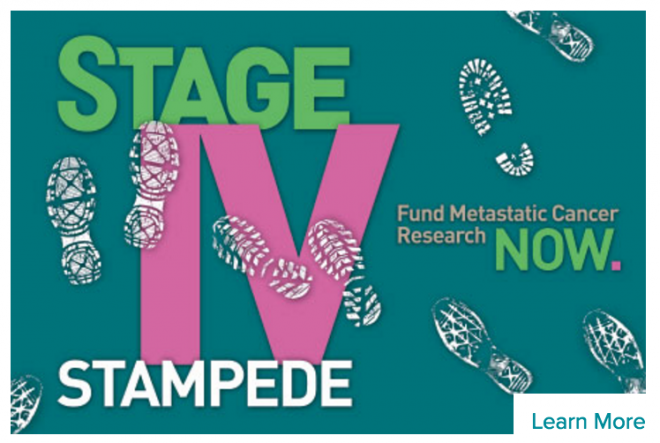
    Feature Image from Metavivor and their Stage IV Stampede protest event earlier this month. For more information about Metastatic Breast Cancer (the kind that kills) see http://www.metavivor.org/

  • Mammograms and overdiagnosis – a hard truth to hear #breastcancerrealitycheck

    Friday while flipping through my RSS blog feed reader, I came across an blog post about an article on overdiagnosis. Unfortunately, I cannot remember where it was or I’d link back to it. The blog post was talking about recent research study:

    Welch, H. G., Prorok, P. C., O’Malley, A. J., & Kramer, B. S. (2016). Breast-Cancer Tumor Size, Overdiagnosis, and Mammography Screening Effectiveness. N Engl J Med, 375(15), 1438-1447. doi:10.1056/NEJMoa1600249

    You can get the abstract from: http://www.nejm.org/doi/full/10.1056/NEJMoa1600249

    If you’d like to see the full document, feel free to leave a comment and I can send along my annotated version.The article itself is very well written and the language is not so filled with scientific mumble jumble such that it does not require a PhD in cancer science to understand.

    The study compares population data (so not just those who have breast cancer but the population as a whole) for 1975-59 (pre-mammography era) and 2000-2002 (post-mammography era). This is the most recent one can get because they are using 10-year survival as a measure – so those who live 10 years post diagnosis are considered to have survived the disease. Also the study applies to the general population at “average risk”, so it does not apply to anyone who is high risk such as those with family history or generic mutations such as BRCA.

    What I took from the article is that mammography has led to finding tumors while they are smaller. Those tumors which might have grown to be large are found sooner. However, and this is a big one, mammography also finds a LOT of tumors that will never grow to be clinically significant. That means, it might find a tumor that won’t kill you and won’t spread. This is very similar to the controversy around PSA screen for prostate cancer. The idea is that you may test positive but the cancer won’t be what kills you. You’ll die of other age related illness first.

    “although trial data may provide an assessment of some negative consequences of screening, such as false positive results and associated diagnostic procedures, such assessments may underestimate what actually occurs when screening is implemented in the general community” (p. 1439)

    It is easy for me to read this report, because it would not have changed anything for me. I had heard that it might be an issue for younger women (under 50), so I had chosen to not do the mammogram that my family doctor ordered back in March of 2014. I do not regret that decision. In June I found the lump. My cancer WAS clinically significant. The first primary tumor was growing rather rapidly. The other two tumors were growing at a slower pace. For me, I can look back and know that I made the right decision.

    “Although the biologic characteristics of a tumor are now recognized to be more relevant to breast cancer prognosis than the size of the tumor,  tumor size is more relevant to the assessment of the proximate effect of screening” (p.1439)

    The challenge with reading the report is more with people for whom overdiagnosis may very well be the case. These are some of the women that I see in support group meetings. They go through horrible body deforming surgeries and long term systemic treatments like hormone therapy for cancers that very well may never have become clinically significant. They do not want to hear about overdiagnosis. They are ristant to the whole idea. They need to believe that they went through this horrible treatment in order to save their life. It is the only way one can live – knowing that you made the best decision you could with the information you were given. No one who has experienced early stage breast cancer directly wants to hear that they did not need the treatment they underwent.

    “given the stable incidence of metastatic breast cancer for more than three decades, despite spanning the era of increasing prevalence of screening-mediated breast cancer and changing patterns of hormone therapy” (p.1439)

    Let that quote sink in a little. The stable incidence of metastatic breast cancer for more than three decades! What this means is that although more women are being identified and treated as having breast cancer, the same number of women are dying from it. Again think about that. It means that some of the women that are being treated would never have died from it even it if had not been treated.

    “Assuming a stable underlying incidence of disease burden and no overdiagnosis of tumors, the additional detection of small tumors should be accompanied by a corresponding decrease in large tumors over time” (p.1440)

    Now for the numbers …

    “The incidence of large tumors decreased by 30 cases of cancer per 100,000 women” (p.1441)

    This is the argument for screening and early detection.

    “The incidence of small tumors increased by 162 cases of cancer per 100,000)” (1441)

    “Assuming that the underlying burden of clinically meaningful breast cancer was unchanged, these data suggest that 30 cases of cancer per 100,000 women were destined to become large but were detected earlier, [meaning caught early or “early detection”], and the remaining 132 cases of cancer per 100,000 women were overdiagnosis (i.e. subtracted from 162)” (p.1441)

    So for 30 people the mammogram meant they found the cancer sooner which may translate to less deforming surgery (I say MAY because treatment options are constantly changing/improving), but for 132 people new cancers were found that otherwise would not have been found or become clinically significant. Note that statistics don’t translate directly to the individual, but this is one way to represent what the data means.

    “For large tumors, the declining case fatality rate predominantly reflected improved treatment” (p.1442)

    One other challenge with overdiagnosis is that it causes a skew in the long term survivorship numbers. If more people are said to have cancer, and they survive, then it looks like our treatments and survival statistics are improving. However, it is an artificial improvement because a portion of the people said to have cancer never would have been diagnosed with it in the first place.

    “Screening can advance the time of diagnosis of a tumor, thereby detecting the tumor when it is still small, without changing its prognosis, a phenomenon termed ‘biologic predeterminism’” (p. 1444)

    In other words, you spend more of your life knowing you have breast cancer. Some women argue for mammography because it does matter for a portion of the population. However, what if you are the person for whom mammography found a tumor, you underwent life-altering deforming surgeries and chemotherapy that has horrible side effects only to learn that your cancer was not the kind that would kill you or even grow to a point that you ever noticed it? Would you not have preferred to not have known about it in the first place?

    “Because tumors with favorable molecular features grow more slowly, they are disproportionately available to be detected by screening (so-called length-bias sampling). Thus, the expectation is that some tumors that are detected by screening when they are small would have favorable biologic characteristics and could have been treated equally effectively at clinical presentation. For this subset of tumors, earlier detection at a smaller size would not translate into a mortality reduction.” (p.1444)

    This is largely what caused me to decide not to that have initial mammogram. I had heard that it didn’t make a difference in survival. I was happily naive. If the cancer is going to kill you anyways, would you not have preferred to have the two, three, five years of living your normal life cancer free before finding out you were going to die from the disease?

    The challenge with the rhetoric around mammography saving lives is that it is not true. What this does say is that we should be focusing more of the cancer research dollars on figuring out what biological characteristics actually translate into cancers that do become clinically significant. We don’t need more complex 3D mammography. We could use more methods of detecting the biological characteristics, not the physical size. We do not need to detect cancers when they are so small that they may never actually be an issue. Rather, we need to be looking at what causes metastasis – what makes it spread – and how can we better predict which tumors will need aggressive treatment and which will never turn out to be a problem – an incidental finding.

  • Trivializing rather than educating …  #breastcancerrealitycheck

    Trivializing rather than educating … #breastcancerrealitycheck

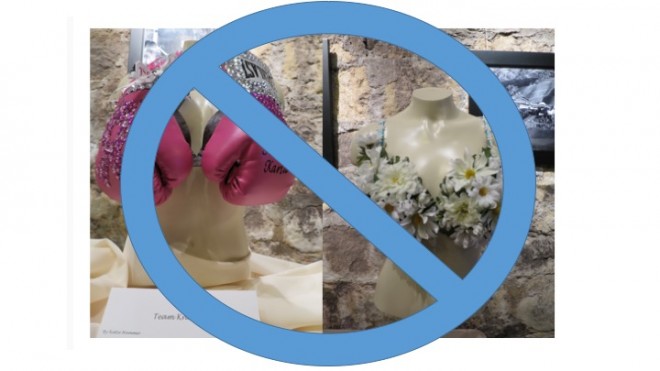
    Get your tickets today to meet our panel of famous judges: <redacted>, Olympic Gold Medalist and World Cup Champion, <redacted>, First Lady of <city> and <redacted>, head of <radacted> Center for BRCA Research as they judge our unique display of decorated bras!

    screen-shot-2016-10-07-at-4-19-00-pm

    <cancer charity> Board Member, <redacted> will discuss new breast reconstruction developments and a special patient will share her journey through breast reconstruction.

    This fun evening will also include appetizers, gift bags and some shopping opportunities, all to benefit <cancer charity>.

    This just crossed my inbox. Now, amongst the pinkness of October (Breast cancer awareness month in case you missed it), there are special days within the month. One key example is BRA day – or Breast Reconstruction Awareness Day. But I fail to see how a competition to decorate bras does anything other than trivialize the exact thing it is trying to educate about. Worse, it makes women who chose to undergo these procedures feel like they are doing so for pure frivolous vanity. It totally delegitimizes something that is a perfectly valid medical procedure.

    Reconstruction was one of the hardest decisions I had to make. What made the decision harder was that I had to overcome my personal self-doubt but also concern over sigma relating to how breast reconstruction is done for vanity reasons. For those who followed my blog, you know that I was convinced I was not going to reconstruct. That was the sigma talking. That was my self-doubt over it being an option that would feed my vanity rather than something that might be critical to my long term mental health. I did a lot of soul searching, and really a lot of self-reflection before I could come to the decision to do breast reconstruction. The surgery was hell (10+ hours under, 5 days in the hospital). I also did a lot of research. I wanted to be truly aware of what I was signing up for.

    For those that want to actually gain some awareness about breast reconstruction, how about you start here: 10 Reasons why breast reconstruction isn’t a boob job by Nancy Stordahl, or maybe watch this great video by Dr. Lee at Stanford that talks about What every women should know about breast reconstruction.

    Breast reconstruction is an individual choice. It can be really empowering and healing to a breast cancer survivor. It is certainly not an easy choice. It is rarely done from a pure vanity perspective – it is hugely more complicated than that. I don’t know of a single breast cancer survivor who would have chosen to get cancer for the opportunity to get a “boob job”. Ugg.

    What gets more even more is that the organization that is sponsoring this, a local charity that provides services to cancer patients. One of their biggest groups of clients are breast cancer survivors. So, why is it that even these organizations are contributing to this type of non-awareness campaign. Could they not think of a better way to fundraise?

  • A stick in the foot

    A stick in the foot

    I follow the nurse into the infusion treatment area (ITA). There is a familiarity to it, and yet it is new to me. I reflect on how nice this ITA is. This is the ITA that I chose not to use when I did my treatment. Not because of the niceness. I knew that the ITA was nicer here than where I got my treatment, but I like the doctors better.

    The nurse seats me in the brand new infusion chair. As with all my treatments, I was chipper and smiled while the nurse setup to jab me. I figure that they have enough grumpy people in the ITA that I do not need to add to that burden.

    I remove my shoes and socks. The nurse uses the electronic function of the chair to raise my feet, which also lower my back into a semi-resting position. I feel like I’m relaxing in a recline, ready to take a nap except that my feet are cold. She puts a warming pad on my right foot in hopes to make the veins easier to find.

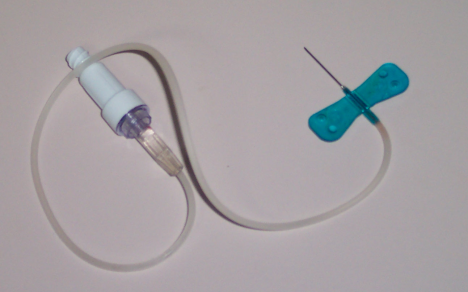
    She puts on the blue gloves, unpacks the blue butterfly needle, and prepares to jab me. I close my eyes and then pain. Ouch. ^&%$. She moves the needle around, and with each move I’m subjected to another bout of sharp pain. Ouch. Then no blood. She removes the needle and prepares to try again. I comment that the needle seems really big/thick. She tells me that the MRI folks require the thicker needle. This time she uses a pink butterfly needle. It is like my veins are playing ‘hide-and-go-seek’. They do not want to be found. She finds a new spot in my foot. I close my eyes again. Again I feel the sharp pain as she tries to find a vein. Again she fails. Again she moves the needle around. Ouch. No luck this time.

    They have a rule at that ITA. The nurses only get two chances to stick you. If they don’t have any luck then they have to find another nurse to try. The new nurse comes and we again put the warming pad on my foot. She identifies a new vein in my foot. I close my eyes. This time the stick is not nearly as painful. The nurses realize that by raising my foot they are not getting blood flow. Once the needle is in, they lower my feet. Blood trickles out of the needle. Yay. I don’t think I could handle a fourth stab.

    The nurse crouches over my foot IV filling the vial with blood. When the vial is full she prepares the saline flush. I recall that I will be hit with a taste and smell of saline that comes from inside my body. I associate that taste with the access of my port for chemotherapy treatments. It is a familiar feeling. What is interesting is that the reaction is delayed. With the port, the taste-smell of saline happens immediately. In the foot it takes about 10 seconds before I get that taste-smell sensation.

    With an IV in my foot I cannot walk the distance required to get to the MRI. The nurse finds me a wheelchair and delivers me across the medical campus to the MRI imaging center.

    You might be asking why I’m getting an IV in my foot? Since my bout with minor lymphedema last year, I’m not allowed to get IVs in my arms. The cancer surgery involved the removal of a few lymph nodes from each arm. Since I’ve already had a minor (very minor) bout of lymphedema in my left arm, my lymphedema doctor has proclaimed that I should not get IVs in my arms. Fortunately I can still do blood draws on my right side, so I do not need to go through this production of getting a foot IV that often.

    I am learning that I will forever be familiar with the local ITA. The ITA is where the nurses are at can do things like access veins in my foot (which often requires doctor approval). I find that interesting too. I’m the patient. I’m the one telling the schedulers and nurses that I need the IV in my foot rather than my arm, and yet they sometimes need to call a doctor to get approval for it. Fortunately, the nurses in the ITA get it. They understand what it means to have lymph nodes out on both sides. They see it. Maybe not every day, but often enough to know.

    I see my lymphedema doctor at the end of October for an annual follow up. Since I no longer have any symptoms (no swelling in my arms), I’m hoping that I can relax the precautions a little. It is a difficult choice. I’m at a lifetime risk of getting lymphedema. My risk was considered really low, and yet it happened. So now, I wonder, how careful do I need to be? Especially when that careful involves added pain? This is yet another quality-of-life question.

  • Incidental findings

    Incidental findings

    Thursday, September 8th

    My eyes quickly scan over the MRI results. The summary diagnosis states “Neural foraminal stenosis”, I flip through the page reading further. “Broad disc bulges” stands out. I flip through to the second set of MRI findings. My eyes fixate on the word “T2-hyperintense area … lesion” In addition “there is a 7x5x7 mm rounded T2-hyperintense structure”. These words are meaningless and yet they are not. The word lesion sounds an awful lot like cancer, and yet the MRI report does not say as much. The report guesses that the T2-hyperintense structure “likely represents a nerve root sleeve/perineural cyst. If clinically warranted, additional contrast-enhanced imaging could be obtained to more definitively exclude a solid lesion”

    I decide to see if Dr. Google can help me make some sense of the report. The word that is stuck in my mind is “lesion”. The main diagnosis of neural foraminal stenosis is not what worries me. What worries me is that T2-hyperintense area. The radiologist reports the exact size of one of the lesions. There is more than one. They explain the onset of upper back pain. They explain some of my odd symptoms. They may even explain the popping sensation in my ears – that is if they are actually perineurial cysts – at least that is what Dr. Google is telling me. But my mind cannot move past the idea that this could indeed be cancer.

    After reading the report, I know that I will need an additional scan – this time with contrast. There is also mention of cervical stenosis so those areas will need to be included in the next scan. The logical person in me says to wait for an appointment with a specialist before getting any more scans. I convince myself that I don’t want to go through the scan multiple times. But the emotional part of me does not want to wait. The waiting feels like forever.

    Hours after getting the results I have an appointment with my primary care doctor. I had the forethought to book the appointment with her the moment I had the MRI booked, so that I would not be stuck waiting for results. When I go to see her, she doesn’t say much. I think I asked about arthritis but I don’t recall her answer. I asked about the lesions. She suggests that she could order the scan with contrast but would rather wait and let the specialist determine what additional scans are needed. If I need to, I will push the specialist for a scan with contrast. I need to know whether or not those lesions could be cancer. The waiting is killing me.

    While I’m still in my primary care doctors office my phone rings. It is the office of the physiatrist calling to setup an appointment. I’m amazed at how quickly I can get in. I could see the doctor on Wednesday, however, I have plans all day that day. I push the appointment to Thursday. What matters is that I have the referral for the specialist. That is the next step. Until then, I will need to wait.

    Thursday, September 15

    The doctor walks in the room. I notice immediately his mannerism are different. I cannot place them. He is almost like a character out of a cartoon, animated in everything that he says.

    “How can I help you?”

    “I have back pain” I say, clutching the printout of the MRI

    “Does the pain radiate to your feet? Your arms? Do you have numbness or pins and needles?”

    The doctor, a physiatrist, isn’t particularly concerned about the cysts showing on the MRI. He doesn’t seem to be particularly concerned about anything. He does, however, order more tests. An MRI of the thoracic spine with contrast and an MRI of the cervical spine. Once we have all the information we can figure out what to do.

    What strikes me most about these encounters is that my mood and my emotions seem to be tied to the ways in which the doctors tell me about the issue. My family doctor refers – she avoids telling me. When I had cancer I could see it in her eyes. This time I could see some form of concern. I think that is what lead to the high levels of stress leading up to the physiatrist appointment.

    The physiatrist seemed to be not worried at all. When I explicitly asked about the cysts, he said, they were just fluid filled pockets – an incidental finding on the MRI. We will do a contrast MRI just to be sure, but his mannerisms seem to be not ones of worry or concern. Maybe it is just his normal mannerism. I don’t know. This is the first time I’ve seen that doctor. Does it matter? I have been much less stressed about the whole thing since that visit. Perhaps that is part of his treatment?

    He pretty much said, we treat it (the stenosis) with anti-inflammatories and pain meds. We leave surgery as a last option. Until my pain is radiating or causing numbness or other issues (e.g. incontinence) they stay very conservative with treatment. No need to see the neurosurgeon, yet. He mentions the possibility of an anti-inflammatory injection and lists off the side effects like a commercial on TV, including DEATH. Ya, nice. Maybe I’ll wait on that one.

    And so, I wait another week. I’m busy – really busy – teaching, research, closet install, storage locker emptying, conferences, doctors appointments, grocery shopping, preparation for surgery next week (minor arthritis in the toe issue), and throwing in daily exercise … so much happening that I don’t have time to worry. Perhaps this is what it means to get back into life post-cancer – busy, busy, busy.

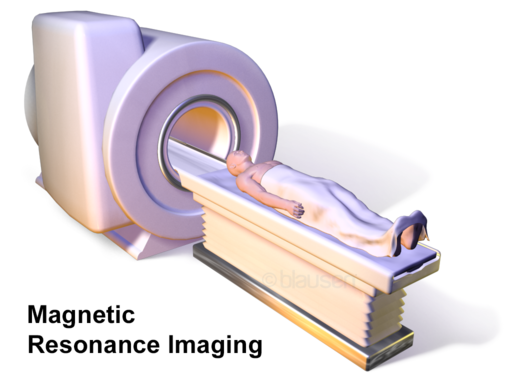
    Feature image: By Blausen Medical Communications, Inc. (Donated via OTRS, see ticket for details) [CC BY 3.0], via Wikimedia Commons

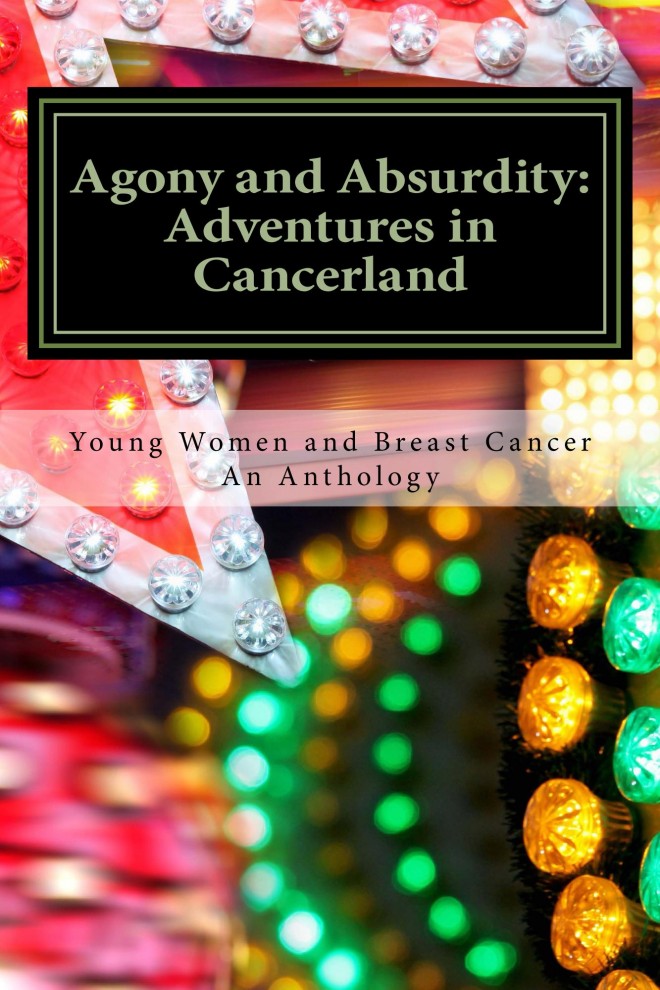
  • Book launch: Agony and Absurdity: Adventures in Cancerland: An Anthology

    Book launch: Agony and Absurdity: Adventures in Cancerland: An Anthology

    Tomorrow (Wednesday) at about 7:30pm Pacific I’ll be reading my chapter, titled “Window Shopping” for the launch of the latest Bay Area Young Survivors (BAYS) anthology titled: Agony and Absurdity: Adventures in Cancerland: An Anthology. I hope to have my reading periscoped – and if we manage that I’ll put the link in here.

    If you are interested, you can buy the book on Amazon. Proceeds go directly to support the Bay Area Young Survivors (BAYS) allowing them to provide support for your those diagnosed with breast cancer under the age of 45.

css.php