BC Becky

Never Thought I'd Want to be a Breast Cancer Survivor

Category: Emotional Journey

  • Allan R Hogue – July 7, 1949-Aug 21, 2016

    Allan R Hogue – July 7, 1949-Aug 21, 2016

    Yesterday at 4:30pm my father took his last breath. He died peacefully surrounded by many friends and family. I’m so glad that so many people got to see him, as he was afraid of being alone.

    We got the news just after we landed in Buffalo. Somehow, I already knew it. I had felt it. On the plane, I was drawn to writing stories about times spent with my dad.

    Like the time I was helping my parents move from Kitimat back to Welland (about 5000km). I drove their RV with my dad as copilot and their two small dogs to keep us company and ensure that we stopped often for pee breaks. One beautiful sunny afternoon as we were driving along the North Shore of Lake Michigan, we stopped by a roadside stand selling smoked fish. We choose a nice package of fresh smoked white fish, then sauntered ofter to the gas station store and picked up a couple of root beers. We hopped back in the van and found a nice park along the lake shore, where we sat at a picnic table and enjoyed our smoked fish and root beer … it wasn’t smoked salmon and real beer, but hey, it worked. It was a special moment that sticks in my mind.

    My dad was definitely creative at solving problems (especially when the reduced the amount of work/effort he needed to put into a task). He was forever creating a jig to do this or that. After moving to Welland, he created a system to get the wood pellets for the pellet stove from the garage to the basement that involved using the shop vac and a bunch of conduit.

    Dad also really really loved to fish. I have a vivid image of a specific fishing hole. We walked through the woods for 20 minutes (or at least that is what I recall), to a large rock that created a whirlpool in the Kemano river. It was ‘the’ spot for salmon fishing. I was never any good at salmon fishing, but dad often caught large fish. I remember one particular day, where he kept catching sockeye – humpies we called them because of the prominent hump on their backs. They were protected, so we had to put them back. We continued to fish until we caught a coho or spring. I don’t know if we came home with anything that day, but that’s OK. It wasn’t really about the fishing.
    Another fond memory I have is going out to the dump to watch the bears.  I wonder if it was just to get us out of mom’s hair for a bit. Or something to entertain us, and keep us from fighting, while mom was at work. I don’t know, I just remember that we’d hop in the truck and go watch the bears at the dump. We lived in a very small stereotypical remote northern town.
    I remember driving down from Sandifer cabin, and dad letting me sit on his lap and steer the truck. I recall there being on particular corner where he said, let me take it around this corner, as it is a long way down!  We were driving along logging roads which had no barrier, and we were high up in the mountain.
    And then there were the times we went sailing. In my teen years we owned a small 24 foot sail boat. We would go out for sailing / fishing trips. My brother would get annoyed because Mike wanted to sail the boat and dad kept making him spill the wind because the boat was going too fast for the fish. We would troll two lines behind the boat. When we caught one, all hell would break lose on our tiny little boat. My job was to ‘get the net’. The sails were moved to “hove to” so the boat wasn’t going forward anymore. Somebody had to grab the second line and bring it in so we weren’t trying to land two fish and so they didn’t get tangled. Landing a salmon on a moving sailboat is no small feat. The whole bout of craziness would take about 20 minutes, and then we’d release the jib and sail away again, and out the lines would go in hopes to catch another one.
    I remember our first overnight trip on the boat. It is hard to imagine how we managed two teenagers, a large dog, and two adults on our tiny sail boat. We went out to Eagle Bay and anchored. I remember my father talking about the phosphorescence and checking to see if the anchor line would glow. Unfortunately it didn’t, and I didn’t discover the phosphorescence until I was trying to sink beer bottles off the docks at cadet camp (it was both cool watching, but also we found ourselves hoping they would disappear before the contraband was discovered!).
    Those are just a few of the childhood memories that are popping through my head.
    2016-08-22 13.35.56
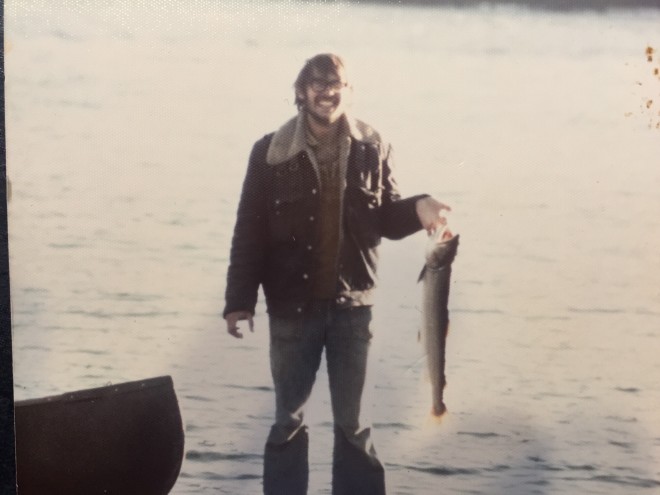
    Feature image:  A picture of my father taken shortly after we moved to BC in 1996. It was his first BC fish.


  • You are being selfish

    You are being selfish

    You are being selfish, I tell myself. Her death isn’t about you, it is about her. And yet my mind keeps bringing my thoughts back to comparisons – comparisons of her cancer to mine. I need mine to be different in some way, so that I can stand on the hope that mine won’t come back.
    You are being selfish, I tell myself. You should be feeling deep empathy for her close friends and family. For her husband. I cannot even begin to image how horrible it is to lose the love of your life at such a young age, and yet my thoughts bring me back to me.
    You are being selfish, I tell myself. I begin to count the people in my support groups, in my circles. The statistics say that approximately 30% will become metastatic and die from this disease. I cannot help but think that with each friend that I lose, it increases my odds of survival. My mind reminds me that statistics don’t apply at the individual level. They don’t translate down. And yet, I feel this overwhelming sense of guilt over thinking that her death means that my chances of survival are improved.
    You are being selfish, I tell myself. These are the most horrible thoughts. With every thought of her loss, tears fall from my eyes. Are they tears for her or tears for me?
    You are being selfish, I tell myself – over and over again.
    Feature image license CC by Mark.
  • Tears of fear

    Tears of fear

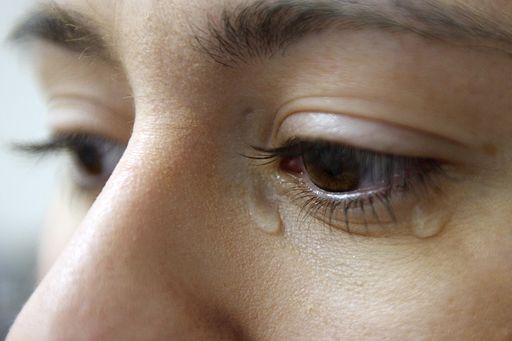
    I scan over the document that she hands me, and immediately my eyes fixate on one word malignant. An uncontrollable wave of emotion hits me. Tears start streaming from my eyes. Just at that moment, the ultrasound tech opens the door to the waiting room and calls my name. She introduces herself but I totally miss her name. I cannot think about anything except that word–malignant.

    “Please remove everything from the waist up and put on the gown with the opening in the front”. She then goes to step out of the room. I look around searching for a box of tissues, and cannot see them. I stop her from leaving asking for the tissues, as tears fall from my eyes and my nose starts to drip. I hate that nose dripping feeling that comes with tears.

    I wipe the tears from my eyes, blow my nose, and take off my shirt and tank top. I put on the gown with the opening at the front, not bothering to tie it up so that the tie doesn’t get in the way of the exam. The tech left me a warm blanket. I lay on the exam bed and put the warm blanket over me. The warm blanket is such a nice touch, it feels like a hug.

    The tech returns to the room, “I’m going to scan your left breast. Do you feel something?” I show here exactly where the lump is that I’m feeling. Lump, it is such a loaded word. Just like malignant. It doesn’t really describe what I feel. I feel an area of hardening inside my left breast near my underarm. It is only noticeable if you press it. I feel my breast and find the hard spot. I show the ultrasound tech and she takes a marker and marks my skin.

    “Please roll onto your right side, I will place this foam cushion behind your back to make it more comfortable. Also, please lift your left arm above your head.” I do as I’m told. The cushion makes it easier for me to relax in the awkward position necessary for the exam. Tears are falling from my eyes again. I lose all sense of feeling. At some point she squirts the ultrasound gel on my skin but I don’t feel it. She starts the scan, and I watch the screen. The areas of white and black swirl on the screen. She stops occasionally to hit a button and take a still picture of what is on the screen. The entire exam takes less than two minutes.

    “I’m going to show the images to my boss, the radiologist, and she will come in and possibly do more scans, and let you know what she sees”.

    I am paralyzed with fear. Tears rolling down my eyes. I remember the words “the radiologist wants to see you”. Words from the day my world got turned upside down. The words I never want to hear again.

    The radiologist, a lovely lady with long curly hair, walks into the room introducing herself. Again, I do not catch her name, tears pouring down my eyes. “The good new is, that I see nothing of concern on the scans. No signs of cancer, no signs of swollen lymph nodes. We will be happy to scan anytime if you notice any changes.” It was the changes that brought me here. I take a deep breath and let out another wave of tears, this time they are tears of relief rather than tears of fear.

    I tell the radiologist “thank you for coming in and giving me good news. It is nice to have a radiologist tell you something good rather than only the bad stuff”.

    Although there is very little use of the term within the academic literature, within the cancer blogosphere this phenomena is known as scanxiety–referring to the fear of scans after a cancer diagnosis. I do not recall when I first heard the term, but I immediately understood what it mean. The anxiety around getting scans and awaiting the results of scans. This is especially the case after a cancer diagnosis, when scans are often the only means of determine whether or not your cancer has returned or whether or not it has progressed (gotten worse).

    I recall reading about scanxiety (sorry, try as I might I could not find a reliable source), that it was not so much about the fear of results, but rather the memories of past tests and past test results. I think my experience this last week is a demonstration of exactly that. I was pretty certain that what I was feeling was scar tissue; however, walking into the ultrasound room for my first breast scan since surgery back in December 2014, brought back a flood of memories, a flood of intense sadness, a flood of fear.

    The story above is based on my week this last week. I wrote it in a different format – one that I’m playing with. It is part of my experimenting with a new voice when working on evocative authethnography for my PhD research

    What did you think? Did the story communicate at least some of the emotions associated with scanxiety? Was it more effective that just describing it, which is pretty much what I did in the two paragraphs following the story. 

    Feature image Public Domain available from Wikimedia Commons.

  • More things they don’t tell you

    More things they don’t tell you

    I’ve been thinking a lot about the things they don’t tell you, thanks to Caroline’s blog post. I think about where I am today and wonder.

    One thing they tell you is that if you have a double mastectomy, you won’t need to screening every 6 months – so no more mammograms. What they don’t tell you is that they likely don’t do ANY screening. This can actually be very stressful, because of that inner voice that says What if they missed something? or What if it comes back?

    For me this has been a challenge. I go days forgetting about it and just going about my day (yay). And then something happens, a muscle pulls, something hurts, and the questions pop up. But as far as my doctors are concerned I’m fine, in remission, nothing to worry about. If I have no symptoms of concern, then they are not concerned. I have to have faith that I’ll be OK so that I can move on, live for today, but also plan for the future. My oncologists likes to say, we are making this or that decision so that you will be healthy 30 years from now. We are not just thinking about the now. I suppose that this is true for any early stage (“curable” – although they don’t use that term anymore) breast cancer. The idea is that treatment sucks but you do it so that you have a good long life afterwards.

    The point I wanted to make is that the downside to not have scans every 6 months is not having any scans, and the anxiety that not having scans can cause. The information to help you make your decision emphasized that not needing scans as a benefit, but it doesn’t really tell you that not having scans can have a down side from your mental health perspective. They don’t do a particularly good job of considering your mental health when they make up their decision tree tools. They look at your interactions with the medical system, and their goal is to reduce them (although they still make you wastes plenty of hours in the waiting room when you do come).

    Last night I found out that a friend died. She was just 30 years old (maybe 30, I recall her 30th birthday). She was diagnosed a few months after me. When we met she was almost finished chemo (or just finished – not sure), and happy to be getting back to things. She moved on from cancer. She moved away from here, so I had not seen her in the last year. Her husband wrote a really nice letter listing all the wondering things she did in the last year from publishing articles (she was nearing the end of her PhD studies), to swimming a mile in open water, to getting married – something I know she really wanted. She was living. Then only three weeks ago she was diagnosed with metastatic (stage 4) breast cancer. She only lived three weeks after mets diagnosis. That is so very quick.

    I think losing friends is what makes the first five years so difficult. Not only are you dealing with your own mortality, and all the physical and mental aftermath of treatments, you are also dealing with the death of friends. Friends who had the same disease you had. In your mind you struggle with thoughts of that could be me? am I next? But also a profound sadness for all those left behind. For the strong men or women in our lives that care for us. We are sad for them too.

    But I’m not sad for having known them. When I think of my friend, I see the light that was in her. I see her smile. I see the energy he had and the good things she did with her short life. She lived. And although her death came quickly, it means that she didn’t have to live with the idea of dying too young for long. It all happened so fast. I’m still in shock.

    Feature image CC0 from Pixabay.

  • What if patients made the recommendations?

    What if patients made the recommendations?

    I was reading through Caroline’s post about What I wish I had known before treatment. She mentions an article about recommendations from breast surgeons regarding prophylactic mastectomy. There is concern that more patients are opting for them, even though there is no oncological benefit (article is here – if you want a copy and don’t have access, email me).

    I see lots of these recommendations – and misinterpretations of them. I found this article to be interesting because of its emphasis on individual patient decision making. It wasn’t pushing a particular recommendation, just saying that this is the evidence to help you and your patient come to a shared decision.

    I do wonder, however, what would happen if the recommendations came from patient’s rather than “evidence” that has not been humanized. I wonder if instead of giving patients the “facts” you gave patients a booklet or video of stories from different patients who opted for the different treatment options. You let other patients describe the impact of the different treatment decisions.


    A lot of the decisions that breast cancer patients need to make are emotional decisions. They are not necessarily logical decision. The choice between lumpectomy and mastectomy (when it is a choice) is individual, but patients aren’t adequately prepared to make that decision. They are presented with facts from a medical system perspective. For example, in the tools to help you make your decision you are told that if you have a lumpectomy, you will keep your breast however, you’ll need to be screened (e.g. mammogram or MRI) every 6 months. If you do a mastectomy there is no systematic screening. It is very much a medical system oriented description of things to help you make your decision. However, the decision isn’t strictly a medical decision – it is an emotional one. It is a quality of life decision. There are also a host of emotional and practical side effects that are never discussed. They are things that the medical system doesn’t care about, but the patient does.

    Age also matters in these decisions – and yet most of the evidence that is used for recommendations does not take this into account. A young survivor (I’ll use under 50 at diagnosis, although most use under 45) has very different longer term life circumstances when making their decisions – and yet that isn’t often taken into account when looking at statistics to provide recommendations.

    So I wonder, what if there was a resource that was a series of concise yet down to earth patient stories, told from a patient perspective? A retrospective analysis of patient experiences – provided in both storied text format and in video format. Something that really helps patients make decisions from a patient perspective, not a physician perspective. Something that deals with the emotional and longer term health impacts of the decision – not just from a medical system perspective but from a human who has to spend the rest of their lives living with the decisions they make.

    What do you think? Would this type of resource have helped you make a decision? Would surgeons be willing to provide this type of resource for patients? Would this be a useful discussion topic for Virtually Connecting ePatients?

    Feature image CC0 from Pixabay

  • Quality of life #patientchat

    Quality of life #patientchat

    I stumbled onto #patientchat on twitter yesterday where the conversation was around quality of life. My first reflection was that it was something I didn’t really think about – quality of life wasn’t on my radar before cancer.

    It isn’t that I didn’t have health issues before cancer, just that I didn’t have to undergo treatments that reduced my quality of life. I didn’t have to make decisions where my treatment decisions would directly affect my quality of life.

    When I hear those words “Quality of life” it brings back a very specific memory. I remember walking along the the Guadalupe trail (the path behind our condo) mid-way through my Taxol chemotherapy (the second drug). I was struggling with the side effects of the chemo.

    The drugs had effected my ability to process visual cues, such that I could no longer drive. I also had neuropathy that was causing pain in my feet. And fatigue. Overall I felt pretty crappy. I remember thinking that if this was my life I don’t want to continue treatment. The thought had with it a tinge of fear – the fear that I didn’t have much more strength to continue fighting, and yet I knew it was temporary, and that gave me the strength I needed to keep going. One might think that this sounds a lot like depression, but it wasn’t. It had more do with with quality of life than it did with sadness. I could deal with it because I knew it was temporary. I would get better. I just didn’t want it to be my every day. It was the first time that I truly appreciated the idea of making treatment decisions based upon quality of life.

    Now I find myself in regular conversations about quality of life. These are conversations that people who have never had to face these decisions can understand. They think that they would just keep trucking along, doing whatever treatment was recommended. But the reality is, when you get into it, there is a certain time when quality considerations take over. This is even more the case when it is the difference between a prophylactic treatment (e.g. hormone therapy) to reduce a potential threat (recurrence) versus a known hit to quality of life. There is no one right answer to this choice – and chances are, if you think there is only one answer, then you haven’t been put in this position.

    For me personally, I tolerate side effects for as long as I can. When they get to be intolerable, I try something new – or I stop, I take a break. I don’t beat myself up for it. I don’t look back on the decision either. I remind myself that you cannot change the past – but also that I know at the time I made the best possible decision I could. The side effects clearly got to a point that I could not hack it, I just needed a break. If that turns out to bite me later, so be it. The reality is, that sometimes quality is more important than quantity.

    I have made other such choices in the past. I am reminded of round-six of taxol. I went into my oncologist’s office on Monday and refused to go to chemo that day. I had had enough. I needed a break. He, of course, convinced me to go back on Thursday, and perhaps add one more week after that … which turned into two more weeks after that. Just enough to get me to the time when we could do the first surgery. I don’t look back on that with any regret. I remember just how miserable I was. I remember that walk along the path and the thought that I just couldn’t live like that.

    All I ask is that when someone says “I stopped for quality of life issues” that you appreciate that it is something that only the person experiencing it can truly understand.

    Feature Image CC0 via Pixabay


  • Ack my boobs are deflating

    Ack my boobs are deflating

    One of the selling points with the DIEP flap reconstruction surgery is that it uses your own body fat (belly fat) to reconstruct your breast. In the decision making process one of the “advantages” to this type of reconstruction is that as you gain or lose weight, your breasts will resize too. But what they don’t tell you is that the fat used to make your new breasts isn’t the same as breast tissue (OK that should be obvious), but what isn’t obvious is that as you lose weight, if you normally would have lost that weight in your belly first, it means you lose that weight in your breasts first.

    I’m finally starting to shed some of the chemo and surgery weight that I gained. I’m down 20 lbs from my post-surgery weight in March 2015. What I’ve noticed with the last 10 lbs is that my boobs are deflating. I can no longer fill the tops of my dresses. Unfortunately, I’m not lose any of the width around my thighs. This is making fitting into clothing an interesting challenge, as my upper body is not aligning with my lower body.

    It has me wondering about my vanity again. In some ways I feel shallow. I’m feeling the cultural pressure to not do anything, because in my circles getting plastic surgery for vanity reasons just isn’t something that is done. And yet I wonder. If my boobs deflate too much (I think right now I’m the only one that really notices the difference), I find myself wondering about fat grafting. My plastic surgeon could take some excess fat from my thighs and graft it to my breasts helping to balance things out again. But that feels like pure vanity. I’m not really likely to jump into another surgery anytime soon – well almost not, I’m going to have a procedure done on my arthritic toe to help resolve that never ending pain but that is another story – I’m not someone who would voluntarily chose to do plastic surgery. And yet, I did. I didn’t have to do breast reconstruction, but I am very glad that I did. Every time I put on a swimsuit or change at the gym, I’m happy that I had reconstruction done. I’m even OK with showing my scars, although I do try to be discrete about it.

    Just like when I reported that my body floated differently in the pool, I thought it interesting to share that as I lose weight the places the fat shrinks first has changed.

    Did you have a DIEP procedure? Did you notice a difference when gaining or losing weight?

    Feature image CC0 from Pixabay

  • My morning time out

    My morning time out

    Therapist: What is it about camping that recharges you?

    Me: I love the early morning. I get up before the campground wakes up. I make my first cup of coffee, and then sit in my camp chair reading. I listen to squirrels scampering around and making clicking sounds. I listen to the birds singing, announcing the sun rise. I take deep breaths and soak it all in. I listen as the campground starts to wake up. Others rustle themselves out of their tents. For me, this is my morning recharge.

    Therapist: How can you do this at home? You can remove the artificial barriers that you are setting.

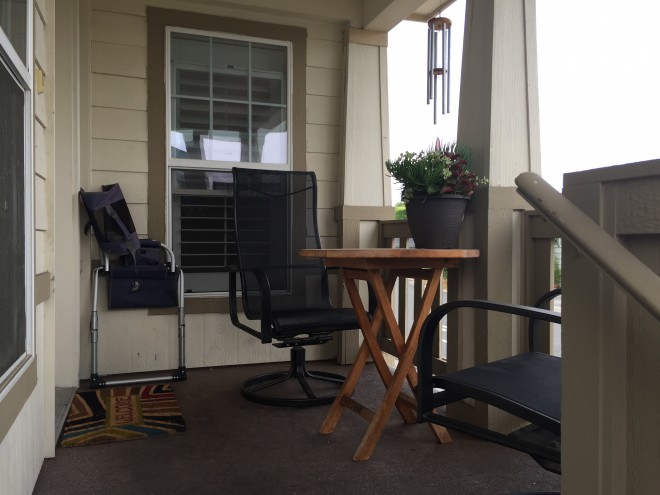
    This is where it occurred to me. I had hoped that my living room would be my sanctuary, but it just has not turned out that way. Then it occurred to me. I have a lovely front porch. I can sit in my rocking desk chair with my second cup of coffee. I can listen to the animals in my neighbourhood chirping. Today it seems I will also be hearing airplanes fly over as they take off and land at the nearby airport. I can hear the wind chimes on my porch. I can have my morning peace to help focus my day.

    I now have a new morning routine. A time where I sit for about 15 minutes – I don’t really watch the clock, I just sit and enjoy my coffee. I listen to the world going by. I colour in the pretty patterns from my various adult colouring books. It is meditative. It is peaceful. It helps me clear my mind. It helps me process whatever feelings I need to process that day. It is my morning time out.

    Feature Image Credit: Rebecca J Hogue. 

  • I hate it when a blogger dies … and a reminder to live …

    I hate it when a blogger dies … and a reminder to live …

    I woke up this morning to news of another young women dying of cancer. This is the challenge when you read blogs and follow people’s cancer experiences on social media – you have to deal with the fact that one day they will die. They don’t know you, but you feel like you know them very well because you have followed them, sometimes for years, through their treatments, struggles, but also watched them live.

    A friend and hiking buddy of mine, wrote this lovely bit of advice to help those who are suffering from anxiety that often hits immediately after active treatment. It is both sad and happy – a reminder that I often hear from those living with terminal cancer – live every day that you can. Enjoy life, because it is life. I try to remember that every time I’m feeling crappy or having a bout of anxiety. Remember to live.

    I was, also, stage 2A, when I was 1st diagnosed (April 2011), and my son was 4 yrs old. I remember being consumed by anxiety & fear, every time a young mother died of cancer. I was totally overwhelmed and crushed by the IDEA that I could die and my baby wouldn’t remember me. Just writing that sentence, now, makes me cry, even though he’s 10 yrs old. I HAVE progressed to stage 4, but he WILL remember me and I have had 5 yrs to create memories with him and try by best to brainwash him to think like me (or at least share my world view). ?

    I WILL die of this disease, but there’s no telling when. Maybe 6 months, maybe 6 yrs. Meanwhile, I LIVE. Every day, I get up and enjoy coffee sitting next to this bigger kid, talking about whatever nonsense is interesting that morning.

    I have lived long enough to be the person he asked about what sex is and how do babies get into a mom’s tummy. That is a Big Deal for me, because I am the only adult, I know, that is comfortable talking to children about sex. I DESPERATELY wanted to be the one to introduce the topic to him, when he was ready, in a healthy, non judgmental, respect and love your body, and the bodies of others, sort of way,8 and I was able to!

    It probably sounds crazy to many people, but my son asking me about sex, and our conversation about it, was a HUGE bucket list item for me. SO much more important that exotic travel, or anything else. Even though I’ve progressed to stage IV, and am living with cancer (death sitting here, next to me) I am still here. I am still here!

    Some days and weeks are better, or worse, than others. Treatment kicks my ass. My son has seen me puke for days on end, and become less “wide” (he notices how WIDE people are, not fat, which I think is hilarious). He has been in the infusion room with me, which is frowned upon. He has gone to many blood draws, etc. He knows my cancer will kill me, but he also knows it could be many years from now, and no matter what happens, he knows that I love him like crazy. He will always know, deep down, that I did everything humanly possible to stay here to be his mom. That’s another Big Deal for me.

    I think my message to you, and every other early stage person, is that ~75% of women do NOT progress after “finishing” early stage treatment. The odds are still better that you won’t become stage 4, and, even if you do, it takes a while to die. And all that “while”, is time to LIVE. Living with a terminal illness is a crazy, emotional rollercoaster ride, but, at the beginning and end of each day, it’s living.

    I still hike, when I can, and it feels awesome! I volunteer at my son’s school more than most healthy moms. I have spent this entire Summer, doing fun stuff, with him. I drag him around on boring shopping trips and teach him to eat dinner without electronic devices distracting him from the meal and conversation.

    I am 100% a mom, and am here to snuggle and discuss life, even though there are weeks I can’t do dishes. I understand, and remember, that fear. It will get better/less, over time. Meanwhile, give yourself room to feel however you feel, know that how you feel will change, and re-learn how to live, fully, each day despite the fear. You may not feel like it, right now, but you’ll be okay, and your son will be okay, no matter what happens.

    ~ By Lori Wallace
  • Coming up for air

    Coming up for air

    I feel like I’m finally coming up for air. I’m starting to get my energy back. I didn’t realize how much energy I didn’t have until I started to feel better. Now I’m still hesitant because I’m not sure how long this feeling better will last.

    My oncologist agreed that I could delay my hormone therapy for a month or so. I’m also off of the first round AI for six months. We’ll see if that is what was making me feel so fatigued. I’m cautiously optimistic. My primary care doctors office (another doctor on the team) has referred me to a neurologist. His comment was that if the brain is OK and you still get headaches then the next step is to look at ways in which to control the headaches. He figured talking to a neurologist about hormone therapy might give me some insights into ways in which I can help my body cope with the low levels of estrogen.

    I already have a ridiculous number of doctors on my care team – I’m also adding a new dermatologist to help treat my dermatitis herpetiformus (DH – crazy itchy rashes caused by celiac disease). After my last exposure while I was traveling a couple weeks ago, my rashes got bad enough that I reached out to my dermatologist asking for new medications to help control them, and he has referred me to another dermatologist that specializes in that area. The subspecialities are a bit crazy. Do I really need three different dermatologists?

    Coming up for air also means that I’m exercising more which is one way to fight off the effects of fatigue. I’m swimming, hiking, and now biking. My swims go for about 45 minutes, with the hope of getting back to an hour. What usually stops me is muscle cramps. I’m not quite back up to swimming a mile but I’m getting there. When I walk or hike it is about 6-7 km. And I successfully changed the tire on my road bike, so I was back on it this week. I road almost 18km. My arm/shoulder wasn’t completely happy with the bike ride, but that in part is because it has been a long time since I’ve ridden that bike. I’m happy to be back on it, and hope to ride it a lot more in the coming weeks. I was hoping to do a short sprint triathlon at my gym, but they ended up cancelling it. So, I’ll stick to my weekly triathlon, getting back into exercising for 2-3 hours per day with one sport per day.

    Feature image CC0 Licence downloaded from Pixabay.

css.php