BC Becky

Never Thought I’d Want to be a Breast Cancer Survivor

Author: Becky

  • Five more years … and a back update

    Five more years … and a back update

    It has been a whirlwind over the last two weeks – with an appointment with my oncologist and an appointment with my back surgeon.

    I was pretty bummed out after my appointment with my oncologist. He again said that I was moderate to high risk for recurrence and that he wants me on some form of hormone therapy for another 5 years. We talked about options, since I really didn’t go through all the options when I stopped a couple years ago. When I stopped I was in pretty poor health. I had just been diagnosed with celiac and high blood pressure and was suffering from lymphedema in my left arm. There was just so much going on that I had to remove variables in order to figure things out, and the first variable was hormone therapy.

    In our prior visit my oncologist floated the idea of 5mg of tamoxifen. I think it is something they are testing for cases of DCIS and previvors (BRCA without a breast cancer diagnosis). Anyways, I agreed to give that a try. And so, for the last four days I’ve been taking 5mg of tamoxifen at dinner time. It causes a slight headache (or at least it did the first couple of days, last night went better). Fortunately, I’m usually pretty mentally burned out by dinner time, so it doesn’t have a hugely negative affect on my productivity. So far, it is something I can live with, so I’ll try that for the foreseeable future.

    I also had an appointment with my back surgeon. He confirmed that we would not do a fusion. He also explained that it would be a “partial laminectomy”. His goal is to remove the least amount of bone possible in order to still reach the nerves. Unfortunately, one of my disk herniations is on the side, which means he will need to move the muscle on the one side to get access. That is likely the part to cause the most pain, as it like spraining your back (ouch). I’ll have a 4 inch incision, but most of that will be superficial, as they will make a tiny hole in the area under L5 in order to access the nerve there and he will shave the disk herniation that is causing the pain. The other herniation at L4-L5 is lateral, so it means he needs to move the muscle to access it. As I understand it, it is about a 1-2 inch area.

    In the end, I feel a lot better about the surgery. He is being as minimally invasive as possible. He is also doing the minimum that needs to be done to clear the nerve pain. I am hopefully that after this I can get back to hiking. It has been a year since I’ve been able to go on a decent hike and I miss it more than you can image.

    What I wasn’t encouraged about is some of the degenerative changes in my back. These changes mean that at some point in the future, I’ll likely need a fuse – but he commented that if I’m careful to avoid lifting anything over 10 lbs and avoid too much strain in bending or twisting, it could be 25 years before the fusion is needed.

    I can hope to live long enough for that to happen. He commented on maybe needing it when I’m 75. This might sound rather morbid, but I just cannot think about being alive for that long. With both my parents dying in their mid to late 60s, and my history of breast cancer, I think it would be a miracle if I can make it to 75! That being said, getting back to hiking and regular exercise will go a long way to helping make that happen. It certainly won’t happen if I become immobile.

    Come January I ask for your prayers and healing thoughts as I do this surgery. I am not allowed to break a sweat for 6 weeks, as the surgeon wants to ensure the incision is fully healed before I do anything cardio related. I am also limited to walking about a 1/2 mile. I’m glad I asked the question, because all the paperwork says that walking is good, but that is written for people who generally don’t walk much. Had I not asked I likely would have been trying to walk 1, 2, or even 3 miles which would not give my body enough time to heal.

    And with that update, I need to get back to work … and back to focusing on dissertation writing and end of term marking.

    Happy Thanksgiving everyone.

    Feature image was taken at Cape Disappointment State Park in Washington.
  • Is this normal? Spinal laminectomy

    Is this normal? Spinal laminectomy

    Is it normal to have surgery booked after a short phone call with a surgical fellow outlining what surgery is being offered? Is it crazy to think that I might want an in-person appointment where the doctors show me my scans and explain exactly what the procedures they are suggesting entail? I’m finding it a bit crazy that I need ask for this appointment.

    The same thing happened with my mastectomy and reconstruction – I ended up booking an extra appointment so that my surgeon could go over what my scars would look like. I wanted to know what to expect so that I could prepare for it. I didn’t want to wake up and be shocked by it.

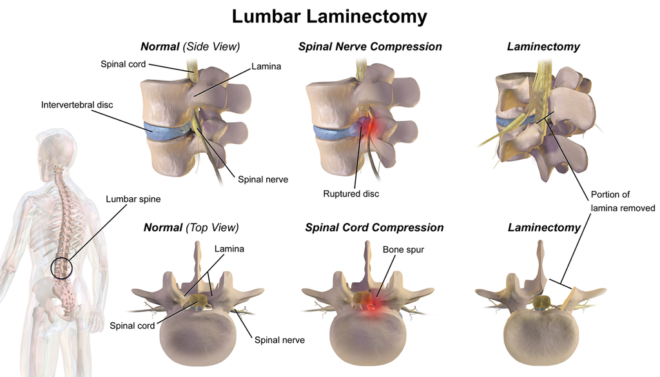
    I now have a date for back surgery – January 2nd. Luckly, the surgery will not be a fusion of my spine. I had a call with the surgical fellow who said something about a double laminectomy – Spine-Health has a great video that explains what a laminectomy of the lumbar spine is. In addition to the laminectomy, they are proposing a discectomy for the herniated disc. The spine-health video shows the minimally invasive discectomy, however, I don’t think that is what is planned, as they will already be in the area for the laminectomy, so if I understand it correctly, they would have access to the disk already and wouldn’t need to open a new incision. I think the lumbar laminectomy video by Blausen is closer to what would happen in my case.

    It just seems odd to me that a surgery this serious would not involve more detailed consultation. I wonder if it is just that people put blind faith in their doctors and are not so concerned? I just don’t get it. I want more information. That being said, I also want the surgery date that they have given me. The window for healing is ideal as it is in the window where I’m not teaching, so I can focus on healing and writing my dissertation.

    And so now I’m waiting to hear back – and find out when I’ll have that appointment where we run through the details of the surgery, and I can see my scans and picture it within my specific context. I’m guessing that I just misunderstood and that the nurse just forgot to tell me that there would be a follow up appointment. Either way, I’m not going into surgery without one.

    Did you have a detailed consultation before surgery? Did you need to ask for additional appointments with your surgeons or their support staff (fellow, physician assistant, or nurse)?

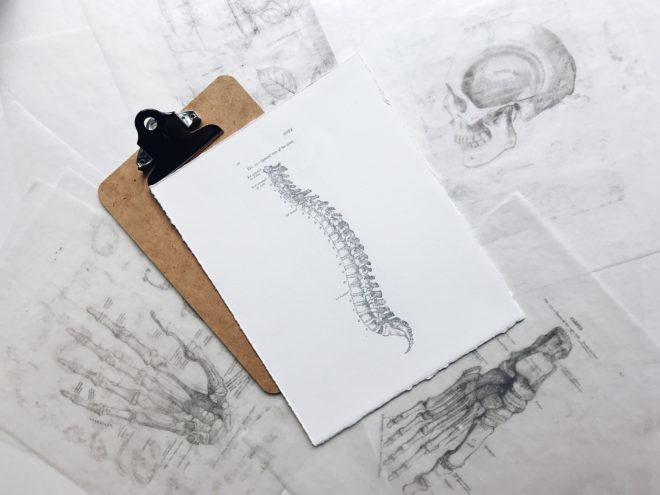
    Feature image by BruceBlaus [CC BY-SA 4.0] via Wikimedia Commons.

  • Kind of like Halloween for an adult with celiac disease

    Kind of like Halloween for an adult with celiac disease

    Yesterday I went to the Nourish Festival. It had been a few years since I last went to a gluten-free expo. I did find this one to be a little smaller than the previous one, but that might have been because the first one I went to everything was so new to me, where this one I was familiar with a bunch of the brands.

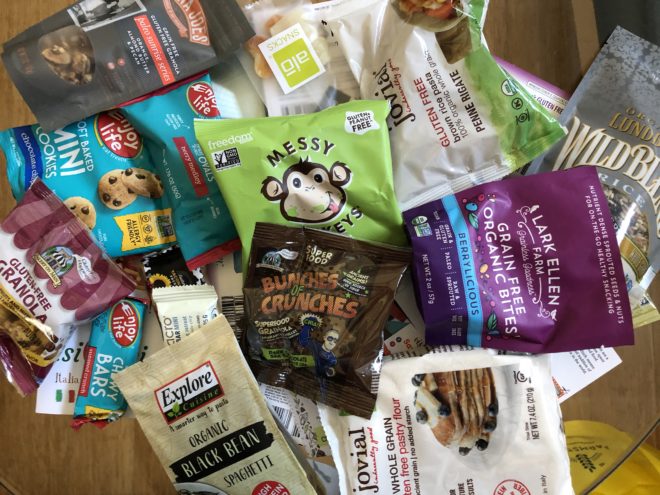
    When I got home, I found myself going three three “loot” bags of samples that I had collected at the festival. I felt like a kid a Halloween, sorting through my samples of different gluten free granolas, snacks, pastas and such.

    What I like about the festival was that I go to try samples of a bunch of different things. I was sad that Against the Grain Gourmet wasn’t there – they make my favourite pizza and I love the cookbook. Unfortunately, their booth was empty 🙁

    My biggest “find” was a decent ramen – Yamachan Ramen, Ramen Z! I had been hankering for ramen for the last month or so, but gluten free ramen is difficult to find – like filo pastry – I have yet to find a gluten free filo, so if you find one, please let me know – anyhow, I did find a great ramen so bought a few of them. I notice that it is made from soy milk and konnyaku – so I won’t be eating them too frequently, however, for the occasional meal they are darn good gluten free ramen.

    Do you have any gluten free favourites?

  • laminectomy or fusion … the woes of my spine

    laminectomy or fusion … the woes of my spine

    As some of you know, I’ve been struggling with back pain – which got severe after I broke my rib mountain biking at Christmas last year. I’ve tried a lot of different things to help improve it – PT, Yoga, acupuncture, massage, spinal injections, and decompression therapy – unfortunately none of it worked. Some of the methods did allow for some temporary relief – mostly taking the edge off that pain – but none of them have given me the sustainable relief that I am seeking.

    If you follow my instagram account you will notice that 2019 has a significant lack of hiking selfies – that is because I have not been able to hike. The pain with walking even 1/2 mile is crazy – I often need to swat down and stretch out my lower back to allow me to go on. I pushed myself to hike 2 miles the other day, and spent the rest of the day in bed with ice on my back. More than anything, I just want to get back to hiking.

    This back pain has also taken me away from the pool. I love to swim. At my “peak” I was swimming a mile (not very fast, it would take me 45 minutes). I miss the meditation that happens then I’m swimming and all I’m focused on is moving my arms and propelling myself through the water. Now when I get in the water and try to swim it is painful. My back hurts. It doesn’t like to flex the way it needs to based on how my body floats. Hopefully pilates will help balance some of the muscles in my stomach and back and make it possible to swim again.

    This pain has also taken a toll on my ability to cook. It hurts to stand for more than 10 minutes – and not just an annoying hurt, but it can get so bad that I need to lay down in order to relieve some of the pain.

    What’s the cause of the pain? I have a couple of herniated discs – one more significantly than the other. All in the lower spine – L5-S1 and L4-L5.

    I’ve started pilates and even have a private instructor who does pilates for rehab. I’m working with her on strengthening in preparation for surgery.

    I got a first opinion from a local surgery who wanted immediately to fuse a couple of my vertebrae – but that seemed rather extreme to me and had me look to other non-surgical options. I’ve now seen a good surgery who comes highly recommended. He laid out three options, depending on the results of scans that we don’t have yet: (1) laminectomy plus discectomy of L5-S1, (2) number one plus the same with L4-L5, and (3) some kind of spinal fusion. He didn’t really go into any detail because we need the scan results. Once the results come in, he will look at them all and make a recommendation.

    And so, this surgery is weighing heavy on me. The timing will hopefully be either late December or early January. This aligns with the 5-year mark from my last major surgery (my bilateral mastectomy with flap reconstruction). I’m afraid of all the memories that will be brought up during this time.

    Part of the desire for this timeframe is that I don’t teach in January, so it will give me some recovery time – however, that is also time that I hope to be working on my dissertation – which I will get back to right after writing this blog post.

    It will also be a different hospital – a little further from home (up at UCSF). The ability to choose a surgeon is a privilege that I am taking advantage of. I’m going to the best because I can – but this means figuring out the ins and outs of another health system – one that doesn’t connect as easily as the other two that I use more frequently.

    I remind myself that I got though a much worse surgery. I am cautiously optimistic that after the surgery, and the associated recovery, that I will be able to hike again. I want to be able to walk the various trails again. I see myself repeating my recovery process – with baby steps, short walks that gradually build back up.

    I will measure the success of surgery in my activities. It will be successful if I can hike, swim, and cook without pain. It will be one step at a time.

    Feature image by Joyce McCown on Unsplash

  • I almost cried

    I almost cried

    I almost cried when as I walked out of my surgeons office – likely for the last time. Thursday I had a follow up appointment with my breast surgeon. When she walked in the room she was excited to see me. She was also excited to show her intern her handy work. She is very happy with how well my breasts turned out – with her only comment being that she wished the scars were completely invisible (they are barely noticeable now). She tried to go and get the plastic surgeon to show her – as my plastic surgeon was also in clinic that day – but alas, she was busy so didn’t manage to pop by. She did get a picture for my file.

    On December 17, it will be five years since my big cancer surgery. It is hard to believe. After a quick exam and conversation about my future plans, she said that “she saw no reason why I would need to see a breast surgeon”. With that I was given the all clear from her perspective. Return if I have a worrying symptom, keep follow ups with my medical oncologist – but otherwise, as far as she is concerned I’m doing fine and I no longer need follow ups from her.

    This is a significant milestone. I have “graduated” to no more appointments with my breast surgeon. I still see my medical oncologist every 20 weeks as I’m still doing lupron shots as partial hormone therapy.

    And so, I felt tears starting to come near the end of the appointment. I want to reach out and give her a hug – and say a hopeful goodbye. I did not, but I should have. Her kindness at times when I needed it most has been a gift. She came to my rescue when things were not going well in the hospital. I have many memories of her holding my hands and telling me I am OK as I cry with relief that what I thought might be something isn’t. I here her voice telling me she had written NED (no evidence of disease) in my chart when I needed to hear it again and again.

    This is perhaps one of the happiest goodbyes I’ve had. She is a such a wonderful doctor, and I hope I never have to see her again!

    Feature image by Mantas Hesthaven on Unsplash.

  • It’s like riding a bike, except when the bike is a recumbent

    It’s like riding a bike, except when the bike is a recumbent

    The other day one of my students made a comment about how prior knowledge and asking how much of it we needed to review. He then used the metaphor of driving a car – stating that everyone knows you “put the key in the ignition”, “put gas in the gas tank” … he went on and all I could do was laugh.

    You see, earlier this week I got a new car – a Chevrolet Bolt – which is fully electric. I had to read the quick start guide to understand even the most basic parts of learning how to drive it. Each time I take it out I learn a new feature. I think it will be at least a month before I have figured out most of it.

    The first challenge was turning it on – press break and hit button as long as the key fob is in the car. There is no “ignition”. It is simply an on/off button.

    After driving it a couple of days, I needed to recharge a little. That too took a bunch of research. Eventually, I went with the slow charge from the house for now – but I might try out one of the quick charging stations the next time I go to the grocery store. Again – this is not obvious. It is like not knowing where to find a gas station and then not knowing how to operate the pump when you get there – nor how to pay – except at the gas station there is an attendant that can help you – with the electric charge stations you are on your own.

    So far, I love the new car. It takes a bit to get used to the even acceleration, as there is no “shifting” of gears involved. I’ve started to play with the manual regenerative braking – it does some of this automatically so I’m not sure if doing anything manually is any better than what the car does automatically when you hit the brake pedal.

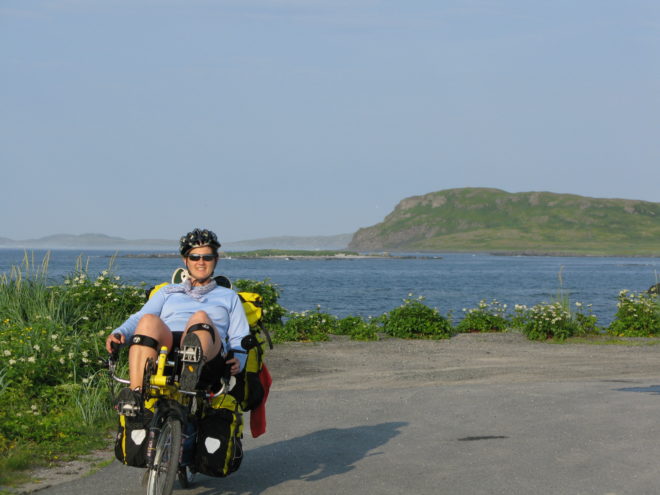
    Last night my husband used the expression we are very familiar with – it is like riding a bike – but we know, that it isn’t exactly the same thing. As recumbent riders, we had to learn many thing aknew – sure many of the skills are transferable, but not all of them. Some of the things you take for granted are different.

    I’m definitely exercising my mind every time I get behind the wheel!

  • Can I handle the emotional hit associated with losing more friends?

    Can I handle the emotional hit associated with losing more friends?

    Back on July 6, 2014 — the day before I started chemotherapy – I wrote about my fears with getting to know others who might one day die from breast cancer.

    To join a cancer community means to admit that I have cancer – but there is more to it than that – it is the fear of joining a community and then losing people in that community. I’m OK with admitting I have cancer, but I’m not OK with admitting that it is something that might one day kill me. I’m afraid that if I develop solid friendships with others who have cancer, that I’ll lose them. I don’t want to have to deal with the death of a good friend – and so, I hesitate. I hesitate to reach out too much to others who are also going through this experience – not because I don’t want to meet these people or get to know them – just that I don’t want to get to know them and then lose them.

    Joining the cancer blogosphere, July 6, 2014

    This is weighing on me today. Since that time I have made many good friends within the breast cancer community. In the last year, I also lost a couple of those friends. Their loss was hard. It was hard to watch them go from energetic powerful women, whom I hiked with regularly – to someone who is struggling to take a breath or a step. But I am glad for the time I did have with them. They showed me how to live.

    After the loss of the last year, I find myself hesitant again. Can I handle the emotional hit associated with losing more friends? And yet, I don’t have a choice. I have made many friends who share being diagnosed as young women (under 45). Statistically, we cannot all survive this disease. It will happen again. We will have others within my community of friends who will be diagnosed with metastatic breast cancer .. and one day, we will lose them too.

    As I reach out to friends who are going through the scary process of biopsies of suspicious lumps, I am scared for them. I am scared that they will hear that the cancer is back – or that is has spread – that they will have to go through treatment again, or treatment for the rest of their shortened lives. I cannot help but hesitate and ask myself – do I want to through this again? Do I want to become closer to those who I know I will lose? But I cannot step away. I need to provide support – whatever little support that may be – often it is just thoughts. I short text or email saying “I am thinking of you today”, so they know that they are not alone — but also that I see you – I am a witness to your struggles.

    I think back to a recent memorial service that I attended. I heard so many great stories of the power that was the person going through metastatic breast cancer, and loving her kids and family. I heard stories of her strength. But I felt like they only saw one side of her. I also saw a different side. I saw not just her strength but her struggles. I held a space where she could take away the shield she put up to help those around her — a space where she could cry and express her frustrations over what the disease was doing to her. It is a particular hug in my kitchen that I remember the most. I remember the smiles while hiking, but also the tears while letting down the barriers that she put up to protect those around her. I hold that memory close.

    So I ask myself, can I go through this again? and then I ask myself, how can I not?

    Feature image by Aron Visuals on Unsplash

  • The time has come to professionalize Peer-to-peer heathcare

    The time has come to professionalize Peer-to-peer heathcare

    Recently on Twitter, there has been chatter about the “don’t Google it” advice given to patients and the role of patient narratives in healthcare related to chronic and critical illness.

    Carolyn Thomas at Heart Sisters, recently wrote a great response to this called The questions you don’t ask your doctors.

    One of the challenges of having physicians “Direct those patients to solid information you trust, which will help to inform future doctor-patient conversations” (Carolyn Thomas), is that we are again asking the physicians who are not living with the disease to decide which sources are trustworthy. They are still not in a position to know what lived experience resources are trustworthy – that is something I believe only a patient could know.

    I think we are ready for a professionalization of peer-to-peer healthcare. We are ready to find experts who live with the disease and include them as part of the healthcare system. Certify them. Pay them. Professionalize the role of providing support with lived-experience where the primary qualification is to have that lived experience.

    In Carolyn’s post, she mentioned Nancy Stordahl’s blog Nancy’s Point as a great resource for breast cancer patients. I couldn’t agree more. When I was ready to start reading blogs – which wasn’t right away – initially I wrote but didn’t read, instead my husband did the reading and finding of great blogs – Nancy’s blog was one that I read regularly. It helped me know that I was not alone in my experiences – but also helped me learn a lot about what I might come to expect. Another great blog is Marie Ennis O’Connor’s Journeying Beyond Breast Cancer.

    In addition to blogs, I also found a lot of support in Facebook Groups. I still find support in Facebook groups. When I thought I wasn’t going to reconstruct I joined a group called Flat and Fabulous. That was an amazing community of women supporting one another. I ended up choosing reconstruction, at which time I changed to a different Facebook group – one that supported others going through the same type of reconstruction. For me, the Facebook groups were a place to reach out and get an immediate question to whether a symptom was “normal”, something I could wait and tell my doc at the next appointment, or something that I should call immediately about. Since the group has an international presence, I could get answers to my questions at any time of day. That goes a long way to reducing anxiety and ensuring that I am getting the best healthcare I can.

    I go back to my point above. I think it is time that we start looking at professional ePatients – those with lived experience who choose to be guides and advocates for others living with critical or chronic illness. We are a huge untapped resource that should be part of the healthcare system.

    The professionalization of this role would also help to address the income gap for those with critical and chronic illness. Not everyone wants to be a professional ePatient – but there are people who do. People who live with there diagnosis, share their experiences, and learn a heck of a lot about the disease. They are experts. It is time we started including them into the system as the experts that they are.

    Do you think we should look at creating a professional ePatient role that is embedded within the healthcare system? What would skills and competencies would that person need to have?

    Feature image by Christina Morillo via Pexels.

  • Back pain … what now

    Once I found out that my back pain was not caused by cancer, I had to figure out what to do next. The pain was unbearable and constant so there was no way I could continue with doing nothing. I first followed up with the physiatrist and booked another back injection. The injected helped temporarily. It took away the constant pain, but didn’t help with the issues I’m having with standing or walking (which means I cannot hike and I cannot even walk around the block!). I asked for a referral to the neurosurgeon – the next step in this process.

    This involved MRIs and x rays, which showed that I have some spinal compression and a herniated disk. The surgeon did a really good job of explaining what was wrong, and what the surgical option would be (fusing a couple of my vertebrae in my lower back). The recovery alone would take at least 3 months and there is no guarantee that the surgery would help. Also, there is a risk that longer term, the surgery would then cause stress on discs further up my spine, leading to the same problem just higher up. That being said, I need some form of relieve.

    I went to see a disc specialist – technically a chiropractor, but one that specializes in disk injuries. He looked at my MRI and showed me what was wrong with my back, and put together a non-surgical treatment plan that involve spinal decompression therapy. The treatment is a bit intense – three times a week for 8-weeks – but also holistic. They do decompression, but also muscle stimulation, cold laser therapy, chiropractic adjustments, and exercise therapy. The idea is that as the spine gets decompressed (using a special machine), this causes negative pressure between vertebrae, which then allows fluid to go back in and rehydrate the discs – leading to healing of the disc. The exercise therapy helps to build up the necessary muscles to help keep the discs hydrated – which is seen as the core of the problem.

    I decided to give it a try. I read some of the criticism about the research – which I see the bias in right away – that is, they complain that there isn’t a “blinded study” and such. The challenge is, that this isn’t something that you really want a blinded study on. I have seen enough of the way some of the cancer trials are done – many are not blind – they cannot be. I cannot see how this could be blinded, as you feel the traction – so you would feel if you were not getting it. I think the blinded trials in mouse studies makes sense, but I’m not convinced they make sense in studies that involve human bodies – bodies that are so individualized and complex. Epidemiological studies make more sense but they are only useful with interventions that are done on large populations.

    Either way, I decided to give this a try and I have some hope that it will provide not only relief from the pain, but a lasting way in which to address it non-surgically. Crossing my fingers that this works!

  • I forgot … and that is a good thing

    I forgot … and that is a good thing

    On Wednesday, as I was signing a bunch of papers, I wrote the date down at least 6 times. June 12, 2019.

    It wasn’t until support group last night when I was introducing myself that I realized that Wednesday (the day before) was June 12. Five years ago on June 12 the radiologist told me I had breast cancer. Five years ago today I started this blog.

    I was a little surprised when I realized the date went by and I didn’t remember it. I had no emotional breakdown or any feelings about it. Now, I do not consider my diagnosis date as that significant, as I still had cancer in me. I had cancer in me until December 17, 2014. That date is one that I am not likely to ever forget. But forgetting the various milestone dates that led up to December 17 – well, it is ok that those get forgotten.

    So today I’m happy because on Wednesday I forgot … and that is a good thing.

    Feature image by Craig Tidball on Unsplash

css.php