BC Becky

Never Thought I'd Want to be a Breast Cancer Survivor

Category: Two years and counting

  • Normalization of ‘young’

    I have said before that with all the talk about surgery in the breast cancer community, the idea gets normalized. That is, if you are part of support groups, you talk about various aspects of surgery a lot. Surgery is the primary treatment for breast cancer. It is the treatment that all early stage patients experience. There is still a lot of fear around surgery, but a lot of the aspects become normalized.

    What I realized was that I also seem have normalized the idea of young. Breast cancer is predominantly a disease of post-menopausal women. It is rare to get breast cancer before you are 50, and yet it happens. Because of this, I am part of a couple young survivor groups, where those diagnosed under 45 (or 50) talk about issues that are slightly different to older women. Some of the women in my support group have young children, others are of childbearing age and having to make difficult decisions about having a baby or staying on anti-hormone therapy. Then there are the economic issues and employment issues.

    But back to my point. When people look at me and see the ‘cancer sucks’ stickers on my laptop, they don’t connect me with breast cancer. I remember during my first infusion, sitting in the chair in the ITA (infusion treatment area) and the gentleman sitting across from me said I was too young to be there.

    It is also a weird age to have cancer. You are not a childhood cancer survivor, and yet you are too young to have cancer. It is odd.

    But since most of my community in the breast cancer world are young survivors, it means I get a sense that being a young survivor is normal. It means that when I see and hear about other breast cancer survivors, I assume they are young. In my mind, the picture of a ‘typical’ survivor is someone my age – and that isn’t true. My experiences in many ways is atypical.

    It is an interesting observation.

  • Snake oil and cancer care

    I have found myself reflecting a lot lately on how one can tell the difference between internet sites / social media posts that are sharing ‘snake oil’ versus those that are sharing legitimate treatment information.

    When I talk about ‘snake oil’, I’m talking about alternative treatments that are in no way proven, but more importantly are intended to generate a profit on the backs of those who are seeking hope.

    I find myself asking, what are the signs (keywords or phrases) that identify something as snake oil?

    I don’t have a clear answer for that. When I hear of alternative treatments that “have no side effects”, that in part is red flag for me. When I hear of alternative treatments that “cure cancer”, that is a red flag for me. Especially in the case of breast cancer, where the word “cure” doesn’t really make sense – we go into “remission”, we don’t get cured. We won’t know if we were cured until we die of something else – but alas, that is an aside.

    When I talk about snake oil, I’m generally not talking about ‘complementary therapies’ – generally. In many cases complementary therapies – given in conjunction with conventional medicine – are not the same as alternative therapies that are given instead of conventional medicine.

    I’m connected to a lot of people who are active on social media in the breast cancer community. I see a lot of different things cross my stream. I find myself looking at them, and often discounting them as snake oil. Things that are clearly intended to extract money from the hands of already cash strapped and desperate cancer patients. But I also see things that might actually be helpful. Things that do reduce side effects. So how do you tell them apart?

    The other challenge I have is in the desire to respect people’s decision to seek the treatment they want, at the same time as not being judgmental, especially when I see the treatments being discussed as pure snake oil. I can see something and think to myself ‘that looks like snake oil’, but I cannot always know that it is 100% true.

    I’d love to be able to teach cancer patients how to recognize the snake oil, but I’m not sure I have a way to do that. I cannot say for certain that western medicine is 100% correct – we have a lot of information that we share in support groups that help us deal with side effects that are not “proven” by western medicine. Those things are not ‘snake oil’.

    I guess for me, the biggest red flag is money. If someone is asking money for something, then it is suspect. Paying money for scans that your doctors don’t believe are necessary, or paying for expensive dietary supplements seem to me to not be authentic. They raise flags as ‘snake oil’ which can do more harm than good. But is money the only thing that triggers the red flag? What other things might be signs that the alternative treatment is bogus? What do you think?

  • Re-grounding

    I cried the entire drive home from my oncologist appointment on Monday. I’m not sure if part of it was that I also had my Lupron shot, so my hormones might have made me a little more emotional than usually. But at least part of it was that I felt like the ground was pulled out from under me.

    At my last oncologist appointment (5 months ago), I had asked about my change of recurrence. I didn’t like the number. I had hoped for a 5-10% number, but instead I got a 20-30% number. That shook my foundation. The mental tool I was using to hold back the fear of recurrence got disrupted.

    Monday I asked about hormone therapy. You see, I’m only partially on hormone therapy. I’m doing the Lupron thing, but not the AI thing – at least not right now. Last time I tried the AI it was a bit of a disaster. I lost 3-4 days of work because I couldn’t think. I had to stop.

    My oncologist talked generally about hormone therapy providing protection beyond the time you take it. They don’t really know why, but if you take it for 10 years, then the protective effect seems to be something like 15 years – so it lasts longer.

    He also talked about the importance of balance and quality of life. He said that if you are low risk for recurrence and have bad side effects, then the decision is easy – stop taking the meds. But, in my case it isn’t so clear. He grouped me in the high chance of recurrence group, but also horrible side effects. He did highlight that some people just cannot manage hormone therapy. They don’t know why it causes such bad side effects in some people but not others. He highlighted that it isn’t a sign of weakness on my part. I should not feel bad that I get horrible side effects. But the part of the conversation that through off my grounding was that of putting me in the high risk category.

    I also asked about neuropathy. I’m 2.5 years out, so this means that any changes will be small – that is, that I can not expect to have any drastic improvement from what I have now. So, my fear of the neuropathy being permanent seems to be the reality I’m destined to live with.

    My oncologist agrees that we should be introducing one change at a time. In the fall I’m going to be changing my mental health/side effect meds. The change will hopefully also help with neuropathy and arthritis back pain. Once that change has happened, I’ll again look at re-introducing the AI (aromatase inhibitor – if you think of menopause as a reduction in estrogen levels, the AI brings the estrogen levels even lower – and since my cancer was fed by estrogen this in effect starves it). There is some hope that the new mental health med will make it possible for me to introduce the AI with limited side effects. We’ll see.

    But all this has left me in need to reground myself. Hearing the “high risk” makes it more difficult for me to think about the future is a positive way. On the other hand, it also reminds me of Carpe Diem – and the need to focus more on the here and now.

    I’m also feeling strong at the moment. I biked 30km yesterday. I haven’t been able to do that in a long time. A couple weeks ago we hiked 10-miles. Again, that is a huge accomplishment. So, physically, I’m starting to feel strong again. I just need to find my grounding mentally.

  • Infusion-fatigue

    As I work through my research data coding, I’m having to read and re-read and re-read… the BCBecky blog posts from the beginning through February 3, 2015. Some of the posts are particularly emotional, as the memories come flooding back. In others, my memory of the time is totally different.

    When reading about my chemotherapy experience, and especially the Taxol experience, I realized something that no one told us when we were making our decision about chemotherapy options. We decided on weekly taxol because we were told it had less side effects (smaller dose). Since we live close enough to the infusion center, we figured that anything that reduced the side effects was the better choice.

    Looking back at it, I find that I wished I’d selected the chemo every 2-weeks (higher dose, but only 8 treatments rather than 12). At least I think that was the option – something like that. The key reason I wish I made the other choice was that I found that 1 week wasn’t giving me enough time to recover before the next infusion. But now, I have a different thought – perhaps what I was suffering from was infusion-fatigue.

    I had read about patients experiencing surgery-fatigue, that is, not wanting to deal with yet another surgery, such that they delay or don’t complete reconstruction. That was part of why I opted for immediate nipple-sparing reconstruction – I managed to finish with only 3 surgeries. I didn’t run into surgery-fatigue.

    When I consulted with pain management, the doctor mentioned the idea of pill fatigue. One of  the key reasons I couldn’t manage the dose of gabapentin they recommended was because it involved taking too many pills too many times per day. Fortunately, there is a 24-hour time-release version, which costs a fortune, but is something that I can and do take. It has been life altering.

    This got me thinking about one of the factors in choosing a chemo regime should be the consideration of infusion-fatigue. This explains what I was suffering from in my post Grumpiness and Mentally Preparing. It is a consideration that I do not recall ever being mentioned.

  • Celebration or not …

    Celebration or not …

    Yesterday marked three years since the radiologist said the words “I’m sorry, you have breast cancer”. It is hard to believe that was three years ago.

    I had a doctors appointment yesterday. At one point I broke down in tears, completely unrelated to the appointment. The doctor asked me what was up. I explained that it was the day – three years since diagnosis –  not anything about the appointment. She told me that I should celebrate. That I should find some way, even if it is just a small way (like throwing a rock into a stream). She talked about the importance of acknowledging being alive.

    I am struck by this. I don’t know what to think about it but the words keep running through my head.

    I did do one thing yesterday that was a bit of a marker of the day. Since I was already up at Stanford, I walked over to my tree – the tree where I took my picture before every infusion and doctors appointment throughout treatment. It has been months since I last saw the tree (might even be a year). I don’t see my doctors up at the main campus that often – mostly I see them at South Bay which is about the same distance but so much easier because I don’t need to spend 15 minutes walking from the parking garage to the clinic – and the parking is free. I’m also having fewer doctors appointments. I’m reducing the frequency of my visits. That too is forward moving progress.

    I took this picture – perhaps that is my celebration – or perhaps this blog post is:

    2017-06-12-13-16-24

    I have hair now. I get lots of comments from my doctors on its length. It is much longer than it was before cancer. What you don’t see is that I don’t really have eyebrows. They didn’t really grow back – at least not enough to be functional (they don’t keep the sweat out of my eyes), and not enough to frame my face when I’m not wearing glasses. Anyways, that is a minor annoyance. I am learning to live with, and be happy with, my new body.

    And the words “you should celebrate being alive” keep ringing through my head. I cannot help but wonder if that celebration is more for the doctor – their achievements in keeping me alive – then it is a celebration for me. I tried to explain that no, today is not the day that I celebrate. But I couldn’t get it out to really explain. The ‘celebration’ or ritual is much more around December 17 – the day the last bits of known breast cancer were removed from my body. That day is significantly more important than the day that I heard the words that haunt me “I’m sorry, you have breast cancer”.

    Do you ‘celebrate’ or acknowledge that day you were diagnosed? What is your ritual?

  • SendIt! Photos from my surf weekend – @senditbrand

    SendIt! Photos from my surf weekend – @senditbrand

    The weekend before memorial day (Victoria Day long weekend in Canada), I went to a cancer camp to learn to surf, hosted by the Send It Foundation. I have always wanted to learn to surf, so this was a bit of a dream come true for me. The surf was freezing, but the opportunity to try was a lot of fun. I realized at the trip that I need to be in much better shape to actually surf. I need to be able to jump up into a squat position from laying down. It was a struggle, but also a motivation. It has helped to motivate me to try harder at getting my body back into physical shape. Although I had no hope of getting up on my feet, I did manage to get up onto my knees a couple of times.

    send-it_stinson_2017_rmcreative_56

    Scott pointed out that I had two heads. The head behind me was my surf instructor. Note that she is wearing a full head wetsuit, cause the water was COLD. I clearly was rather focused.

    After a morning playing on the surf, we went out standup paddle boarding. I had done it once before in Niagara-at-the-Lake (where the water was really warm). Here, I’m wearing a wetsuit so I don’t freeze if (when) I fall in.

    send-it_stinson_2017_rmcreative_79

    I did well going down the lagoon, but then couldn’t get back. I was fighting both the wind and the current. I ended up on my stomach being pulled back by the rescue kayak. I then traded in my standup paddle board for a position as a rescuer.

    send-it_stinson_2017_rmcreative_101

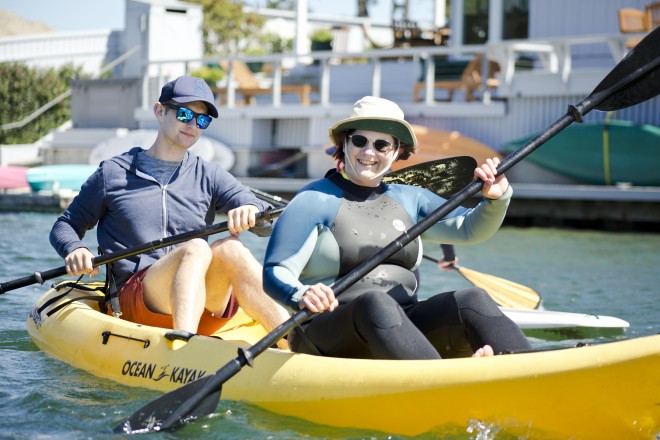
    This was my first time kayaking since surgery. I had no idea if I’d be able to do it all, so I was glad to be able to try it out. I actually did pretty good, but my body (especially my upper body) was tired from the morning of surfing and the standup paddle boarding.

    We did a second day of surfing, and some exploration of the town of Stinson Beach, the next day – however, the professional photographer wasn’t there, so I didn’t get any nice photos.

    In the end, I did manage to try out all the things I had wanted to – and it opens more doors for me. I know now that I can kayak, although I don’t think I’d be comfortable in a single kayak just yet (unless there was no wind). Back in 1999, my hubby and I spent a few days kayaking in Southern Haidi Gwaii, and have done several other sea kayak camping trips, so I was not unfamiliar with kayaking (and how to paddle correctly), mostly I didn’t know if I could do that with my post-surgery body.

    I am very glad that Send It let me join them. I’m a little older than their normal crowd. There is a challenge with being diagnosed with cancer in your 40s. I’m considered a ‘Young Survivor’ from a breast cancer perspective, but a lot of the charities that provide adventures to cancer survivors use 40 as their age cut off – so they aren’t open to me – unless they make exceptions. In this case, Send It made an exception, and I am grateful for it.


  • Remission society and mourning my fantasy future

    Remission society and mourning my fantasy future

    I apologies to those who read all my blogs, as I am cross posting this. I’d love to hear answers from the various readers of my different blogs.

    I want to connect two ideas: the idea of remission society as described by Arthur Frank (1995), and the concept of the fantasy future that I learned while on a cancer care retreat at Commonweal (February 2015).

    Frank (1995) explains that anyone with a chronic illness lives in the remission society. Frank (1995) describes how “in modernist thought people are well or sick. Sickness and wellness shift definitively as to which is foreground and which is background at any given moment. In the remission society the foreground and background of sickness and health constantly shade into each other” (p.9). I interpret this as the way in which I shall never not be a cancer survivor. Breast cancer is a sickness that will always be part of my identity, regardless of how healthy I am at any given moment. It also will always affect my wellness. I will never be well in the same way I was well before cancer. I may be in remission, where I am not sick but nor am I well. I think of remission as this space in-between, or perhaps above or below, not on the same axis as the well or sick dichotomy.

    In order to deal with my emotional wellness, I needed to address the loss of my place in the well category in the well or sick dichotomy. While in active treatment, I was clearly in the sick category; however, once chemotherapy and surgery where done, and the last of the known cancer was removed from my body, I was no longer in the sick category, but also was not in the well category. I was in remission. It was learning of the falseness of this dichotomy that helped me move beyond it. During a group therapy session, the therapist made a reference to the idea of a fantasy future. That is, the concept that all futures are a form of fantasy. We imagine what our future life might entail (e.g. growing old together, remaining in perfect health), but the reality of life is never what we had imagined. A big part of my emotional healing was to forgive my body for the loss of my fantasy future.

    Another part of this reality, and one that I’m still working on, is that it should help me focus more on the present. What is in the now, and the short term future, rather than the long term future. This is, in theory, to help reduce anxiety today, but focusing on today rather than focusing on the uncertainties of tomorrow. However, this of course causes the problem I describe in my paradoxical future. Where I struggle with the challenging balance between planning for the future and seizing the day.

    Perhaps that is in part what it means to be in the remission society (as opposed to being sick)? When I was clearly sick, my focus was on a very short timespan. I saw life on very short horizons – tomorrow, next week, next month – never more than three months. I just couldn’t plan that far in advance. But now, after I have mostly healed from chemotherapy and surgery (I say mostly, because some of the damage will never be healed), I see the potential for those horizons. It is because I see them only as potential and not concrete that I run into the paradox. Sure anyone who is well will say that they don’t see the future in concrete terms, but in the scale between potential and concrete, a well person sees the future a lot more concretely and someone who is sick, who only has a sense of potential for the future. In this world of remission society, I’m somewhere in the paradoxical middle. Afraid to have a fantasy future, because I got burned by that idea.

    Do you have a fantasy future? How concrete is your sense of future?

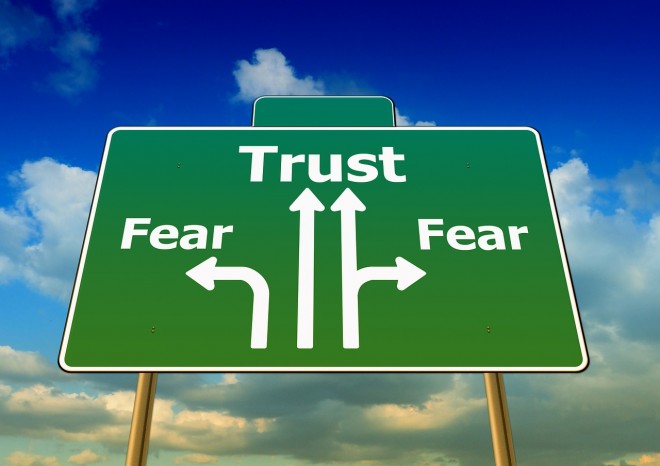
    Feature image CC0 via MaxPixel.

  • My paradoxical future

    My paradoxical future

    I’ve been struggling a little lately with this thought – how do I envision my future? When I was diagnosed with cancer, I had a clear sense of what I no longer wanted to do. I was blessed with the ability to forget about sunk costs, and just make decisions based upon what I wanted to do during the times when I was not sick or in treatment. Between all the doctors appointments and chemo nausea, I spent time focusing on daily exercise, reading books I wanted to read, and doing things I enjoyed (e.g. camping, sailing).

    Now that I’m two years post treatment I find myself struggling to figure out how much I should be planning for the future. I worry about getting old and not have access to healthcare, but then I think, maybe I won’t get old, so why worry. I know that sounds kind of morbid, but there is a reality in it.

    I often ask myself “If I only had 5 years to live, is this what I would like to be doing?” (I thought I had written about that before, but I cannot seem to find that post). What I am wondering right now is why is what I’m feeling today different from what I was feeling when I wrote that blog posts (or didn’t write it!).

    I’m feeling paradoxical about my future. Part of me is optimistic. I want to plan for a future that has me getting healthier and having the flexibility to do what I want. I want to plan for a future where we have the financial stability necessary to enjoy life without feeling the need to work. And wouldn’t it be nice to know we had access to healthcare as we aged?

    Then I find myself wonder, “if I only had 5 years …” and I’m thinking, why I am wasting my time with working (really it is why I am encouraging Scott to keep working), and why don’t we just quit everything and travel and enjoy ourselves. Why not forget that we might have a future, and live life to the fullest right now? Will I end up regretting not taking more time to have fun?

    Part of the challenge is, that when you are in that window of “if I only had 5 years…” chances are you are also too sick to enjoy it. The reason you only have five years is because you are sick. And that sick takes away your ability to really do those things that you want to do, so you need to do them while you are healthy enough to do them, but when you are healthy enough to do them your life is so focused on the future.

    I recall one of my epiphanies from our time at Commonweal, was the concept of a fantasy future. In many ways, we needed to grieve the loss of a future that was never going to be anyways. That future that I lost was one where we were health and grew old together. It wasn’t a realistic view of the future. I knew that at some time or another something would happen to make one or both of us not healthy. We decided to go on our 16-month bike trip when we did in part because I felt like it was really a “now or never” kind of thing. I didn’t see myself getting healthier in the future. Boy am I glad we did that!

    And so, I’m back into that paradoxical thinking. I have a desire to both plan for a long future and I’m feeling the need to seize the day.

    For my readers that have deal with critical illness, how do you approach the paradox of planning for a long future and seizing the day?

    Feature image CC0 via Pixabay.

  • Today I put my wedding ring on

    Today I put my wedding ring on

    I took off my wedding ring in a bit of a panic as I noticed my left arm swelling. That was back at the beginning of October in 2015. Reflecting, I remember it being several months before I got into see the specialist – but looking back on it, it really only took 3-4 weeks – funny how time causes a shift in perceptions of time! Anyways, I remember feeling like it was taking forever to get into see the world expert in lymphedema – fortunately he is also at Stanford so my breast surgeon’s office could provide enough of a squeaky wheel to get me in. I think the sense of time shift was in part because my hand and arm were clearly swollen and I was in a bit of a panic about what to do about it.

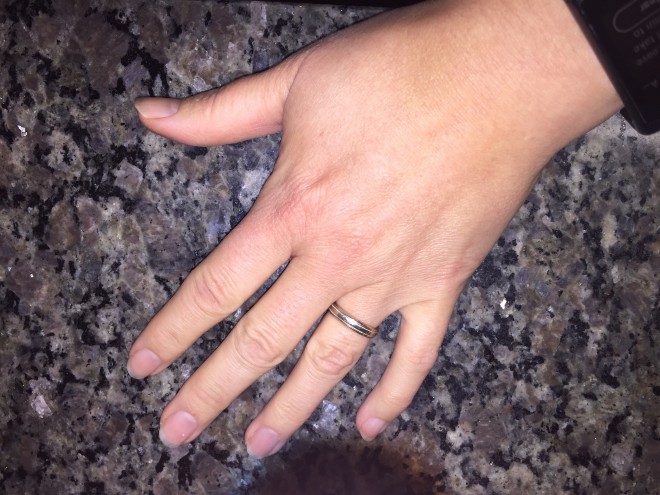
    I was lucky. I got treatment quickly, but also my issue was minor. In the image below you can see how my left hand is all puffy – that was October 3, 2015. Compare that to today’s feature image.

    2015-10-02 13.43.20

    It took more that 6 months of daily compression (30-40 mmHg) to clear it up. Now I need to wear sleeves (on both arms because I had lymph nodes out on both sides) when I’m over 5000 feet, flying, or doing exercise that involves strain on my arms. Fortunately, the preventative sleeves are only 20-30 mmHg, so more comfortable. That being said, when my arm was swollen, the compression felt good. Now that the arm is not swollen it is not very comfortable – mostly just a nuisance. The bigger issue, which I’ve lamented on before, is that I cannot take IVs in either arm – that will be a lifetime pain the foot! However, with each IV in the arm, there is a 1% chance of lymphedema of the most nasty kind – causing the effected arm to swell to 3-4 times the normal size within hours.

    Recently, someone who just had some arm swelling was asking me about my experience – which made me want to write this. I want this to be encouraging. That being said, I cannot say anything about major lymphedema as I only had minor lymphedema (stage 0/1). I’m told that if it was any worse then it would be “a one way street”, that is, not curable. But for those who are reading this that only have minor swelling, there is still a chance that it can get better. I attribute my healing to compression, but also to swimming. I made a conscious effort to swim at least 3 times per week – swimming about a mile, which meant an hour in the pool.

    My arms have been clear for more than six months now, so I finally feel ready to put my ring back on. I had been afraid that putting it on would cause things to swell again – some sort of jinx or something. However, I found that I was missing my ring. I wanted to wear it again. Fortunately, it still fits! And so, I have returned my wedding ring to where it belongs – on my finger!

    Do you have experience with minor lymphedema? Did yours get better? If so, how long did it take and what did you do to treat it?

  • Back pain (not cancer) and the need to self-advocate

    I thought I’d start by saying that this post doesn’t talk directly about cancer – in that my back pain isn’t caused by cancer as far as I know – it is caused by arthritis and spinal stenosis.

    My back pain had gotten so bad that I finally made the decision to try the epidural injection. When the shot was first described to me, I was scared away from it. I opted to use anti-inflammatories and pain killers as a way to manage my back pain. It mostly worked for a few months, but then things started get worse. It got the point where I was ending almost every day in pain. Cooking, something that I love doing, was one of the worst offenders – because it involved a lot of standing. My family doc had mentioned that the shot had helped a lot of her other patients, so with that, and the continued pain, I decided to give it a try.

    The process turned out to be a little more involved than I thought it would be. I had envisioned going to the doctor’s office, bending forward (or laying down on the examining table) and having a couple of shots placed in my back. I’ve had cortisone shots before (e.g. in my toe before my toe surgery), and so had thought this too would be that simple. Nope. This shot was done in the day surgery center. It wasn’t a surgery, but was still rather involved.

    The first point of pain was that I could not eat or drink anything before the procedure – as is common with most surgeries. Not a huge deal. I’ve actually gotten pretty used to it (ugg… hate that surgery has become normalized for me).

    The next point of pain involved getting an IV. This turned out to be much more of a production than I expected. I’m not allowed to get IVs in either arm. The lymphedema specialist was very clear on this one. Anytime I have an IV in my arm, there is a 1% chance of irreversible lymphedema. Within hours, my arm could swell to the point of it becoming a medical emergency. It would be much worse than the minor lymphedema that I experienced last year (which took wearing compression garments for 6 months to relieve). And so, this time I was firm with the staff that I could not take an IV in either arm.

    None of the nurses were comfortable with the idea of placing an IV in my foot, so the anesthesiologist was called in to do it. Unfortunately, he wasn’t able to find a vein. My veins were hiding away – as I had been dehydrated from the “no drinking” part of the preparation. After confirmation that the IV was required (the doc wouldn’t give the shot without an IV and some sedative), they called in another anesthesiologist who was could place an IV in my neck if needed. After a fair bit of a wait (they said it could be 2 hours, but it turned out to only be another 45 minutes), the new anesthesiologist came in.  I had realized after the first failure to find a vein in my feet, that I had been laying down while he was trying. Laying down makes the veins hide. I had suggested to the nurses that maybe he could try again while I was sitting up, but they opted to call in the second anesthesiologist instead. She listened to me. She had me sit up, and dangle my feet off the side of the bed. After a few minutes, and a failed first attempt, she was able to get the IV in the second attempt.

    I couldn’t help think about the difference in approaches – and how each made me feel. I hated the paternalistic bullying that I felt from the first anesthesiologist. His comment to me about how “it is OK to take an IV in my arm” despite what I had told him felt rather condescending. It was like after knowing me for 2 seconds, with little to no history of my condition, he had a better sense of what was good for me than I did. That my opinion on the matter wasn’t relevant to him. That being said, consent was needed, and I would not consent to an IV in my arm, so he had to do it my way.

    With the IV in place, I was wheeled in, given a little versed via IV, given the shot, and wheeled out. The entire procedure was maybe 20 minutes. The IV issue meant that I spend 3 hours in the surgery center instead of 45 minutes. Ugg.

    The good news is that so far the shot seems to have relieved a lot of my back pain. It isn’t totally gone, but it is no nearly as unbearable as it had been. I’m hoping that with the relief, I can now concentrate on some strengthening and stretching exercises that will reduce the likelihood of the pain coming back. I am hoping that the nerve block (which is what they did) lasts.

    I’m not at all happy about all the drama associated with getting the IV. This is something that I’m going to be struggling with for the rest of my life. I need to find a better way to ensure that people know and understand what it means when I say I cannot take an IV in either arm (even from a scheduling perspective, so that they have the right staff available when they schedule the appointment).

    I’m also left reflecting on what others who are not so willing to self-advocate do? Would you allow the anesthesiologist to place an IV in your arm knowing that it could cause permanent damage? How do you stay strong and self-advocate when you are also in pain? Why does navigating the healthcare system need to be so hard?

css.php