BC Becky

Never thought I’d want to be a breast cancer survivor

Category: One year and counting … again

  • Standing Up

    Standing Up

    I have a knot in my stomach. I’m scared. I feel like an impostor. Will the water be too cold? Can I get back on the board in deep water? These thoughts are running through my mind as I prepare to leave. 

    I have been paddleboarding for years. I bought a Stand up paddleboard (SUP) during Covid. Unfortunately, I ended up working a lot then had a recurrence of cancer. Physical limitations and inability to plan meant no paddleboarding. 

    This year started out well. I was stronger than before. The first time out, I paddled the entire length of Wiles Lake without needing to sit down. That gave me the confidence to sign up for the advanced level course. It sounded like a good idea at the time. 

    I’m anxious about my ability to get back on the board, especially with my chronic back pain acting up. I’m nervous that the other people in the course will be athletic and beyond my ability.

    But, I’m going to do it. I know that I need to push myself outside of my comfort zone in order to improve. I have given myself permission to leave the course mid-way through if it isn’t working for me. If my back is at risk of injury, I will stop and come home. Giving myself that permission is what I need in order to be OK with going forward. 

    I leave half an hour early, hoping to talk to the instructor in advance and let him know about my concerns. When I arrive, there is no sign of activity in the store front. I go down to the water and test the temperature — nice and warm. Unfortunately, I messed up the timing. The class was this morning. I missed it! 

    I could go out on the ocean at LaHave Islands, but I’m nervous about paddling in unfamiliar waters alone. Instead, I take as a sign that it wasn’t meant to be. I decide to drive over to Fancy Lake and paddle in more familiar waters. 

    The lake is as smooth as glass and is empty. Since I’m paddling alone, I don my personal flotation device (PFD) and board leash. I attach my Crocs to the front of my board, so I can always swim to shore if I’m not able to hop back on after a fall.

    After 20 peaceful minutes paddling, a guy takes out a Jet-ski and tows kids on a tube. They pass on the far side of the lake. I turn into the wake and have some fun bouncing over the artificial waves. He returns and again gives me lots of space. On his final pass, he loops around me, closer, causing confused water. Then he slows down causing a huge wake. I turn into the largest wave, but it is too big. I put my paddle in the water. As I complete the stroke and lift the paddle I go flying. 

    I think, no big deal. The water is warm and I wanted to practice getting back on the board anyways.

    First, I try with my PFD and leash on. I kick to get up but  only get partway. I cannot get enough of my core onto the board, so when I try to lift my leg the board tips.

    Next I decide to try and make a paddle float, like I learned during a kayak self-rescue course. I tuck my paddle it into the straps at a right angle. I try and try again, but still cannot get on. 

    Then one of my Crocs starts to float away – oops. I grab it and tuck it in more solidly under the straps. This extra effort saps my limited energy.

    I cannot get enough kicking power. The paddle leash is getting in the way. I remove the leash and try again. I’m getting higher up on the board, but I’m getting stuck on my PFD. 

    I’m tiring. I remove my PFD and hook it to the board. I don’t have many attempts left in me before I need to give up and swim to shore. 

    Fortunately, this attempt works and I’m able to get back on. This is exactly what I was afraid would happen during the course. 

    Glad to be back on the board, I paddle a bit while sitting, then eventually stand up again. I stay close enough to shore that I can swim in if needed. Just outside the swimming area, I jump off the board to try again.

    I start by removing the leash and my PFD. I try a variety of configurations — PFD as float for my thighs, PFD as paddle weight, Crocs as foot buoyancy — none of them work. I run out of ideas and energy. I swim back to shore towing the board behind me, promising myself I’ll watch a few SUP YouTube videos when I get home. I really need to figure out self-rescue. 

    I learn a couple of things from YouTube. First, I need a longer leash. My leash should be as long as the board. My current leash is only half that length. I also learn of another technique which involves using a rope connected to the handle that acts as a stirrup, like getting on a horse. In theory, that would give more force when jumping up onto the board, allowing me to more of me on the board before trying to swing my leg up. 

    Now I have to try again.

    The next day, I hop on the board, ever hopeful. The water is warm on my feet as I get myself organized. I clip on the dry bag with my keys and my water bottle. I check that the new stirrup strap is attached to the carry handle. I awkwardly, as always, sit on the board and remove my Crocs. This time, I use a carabiner to attach them. I don’t want a repeat of them floating off!  

    I slowly paddle out to deeper water, now is the time to test out my stirrup. While still sitting on the board, I lean back and fall into the water with a splash. The water is warmer than a swimming pool and feels wonderful on my skin. I love being in the lake at this time of year. 

    First I try the stirrup while still wearing my PFD and leash, but the leash is so short it makes it impossible. I remove the leash and try again. Nope. 

    Since the stirrup doesn’t work, I use it to make my leash longer. When I try this time, I feel the extra power in my kick, but my PFD still gets in the way. I remove it, and finally I get back on the board.

    Success. Yay. 

    I hear the call of a loon. I see a couple of them in the middle of the lake. This is my signal to go out for a paddle. I stand up and wobble a little, keeping my knees soft. As I take the first few strokes I notice the board is sluggish. As I paddle out towards the loons I notice that my board is sagging in the middle, a clear sign that it is under-inflated. I return to shore and pump up the board. 

    With the board fully inflated and a longer leash, I try again. I succeed. 

    I still struggle with the idea of paddling on my own. It has been ingrained in me from a young age that it is unsafe. However, I really enjoy it. If something happens and I die, I know that I will die doing something that I love. 

    I feel a sense of relief to have figured out self-rescue. I can now confidently paddle alone. As I paddle, an eagle flies directly over me, congratulating me. Telling me, you got this!

  • Words Matter

    Words Matter

    This is a story written base on reflections my initial year after diagnosis (2016), with added comments about what I’m thinking after my second diagnosis (2024).

    Like my stories? Please subscribe.


    ~~~~~ 2016 ~~~~~

    Words matter. Certain words sting, and one of them is “prevention.” Why? Because “prevention” suggests we know the cause of something and have the power to stop it. For me, that word lands heavy, almost accusatory. It’s like an unspoken judgment: You didn’t prevent this, so maybe you’re to blame.

    I stumble across another concept: healthy privilege. It’s the idea that if you’ve never faced a serious illness—or cared for someone who has—you can’t fully understand what it’s like. I’m drawn to the explanations I find, especially the Spoon Theory, which perfectly captures the daily toll of limited energy.

    The Spoon Theory, created by Christine Miserandino, is a metaphor for the energy it takes to get through the day when you live with chronic illness or limited health. Imagine starting your day with a set number of spoons—each representing a unit of energy. Every task costs a spoon: getting out of bed, making breakfast, answering an email. Unlike someone who is healthy, you don’t have an unlimited supply. Once your spoons are gone, you’re done. There’s no borrowing from tomorrow. For those of us who’ve lost healthy privilege, every choice, every activity is a calculation: Do I spend my last spoons folding laundry, or do I save them for dinner with my family?

    Before cancer, I didn’t  understand what it meant to always be living with a limited number of spoons on a given day.

    Healthy privilege and “prevention” collide in my mind. That word—“prevention”—feels like something healthy people cling to for security. For them, it’s a comforting thought: “If I do everything right, I’ll stay safe.” But for those of us who’ve been through illness, the word loses its comfort. It can feel like a weapon. It carries an undertone of blame, a suggestion that maybe we failed.

    Take breast cancer, for example. The phrase “preventing recurrence” pops up all the time in discussions. Yet it’s misleading. The truth is, we don’t know what causes breast cancer to return. We can take steps to lower the risk, but we can’t eliminate it.

    People who eat the “right” foods, exercise daily, and follow every medical recommendation still get breast cancer. Some progress to stage IV despite doing everything they’re told. Healthy choices may correlate with a lower risk of recurrence, but correlation isn’t causation. Just because something’s linked to a reduced likelihood doesn’t mean it prevents cancer.

    ~~~~~ 2024 ~~~~~

    Since my recurrence, I’ve already done everything within my power to reduce the chances of the cancer coming back. The surgery removed the cancer, and the chemotherapy and immunotherapy—Herceptin—were steps to lower the risk further. Yet, I know that lowering risk isn’t the same as preventing recurrence.

    My cancer was triple positive, meaning it was driven by HER2, oestrogen, and progesterone. Because of this, my treatment plan doesn’t end with chemotherapy. My next step is hormone therapy, which targets the hormones that fuel the cancer’s growth. In hormone receptor-positive cancers like mine, oestrogen and progesterone can act like fuel for tumour cells. Hormone therapy works by either blocking the hormones from attaching to cancer cells or reducing the body’s ability to produce these hormones altogether.

    For me, this means trying Letrozole, an aromatase inhibitor. Unlike tamoxifen, which blocks oestrogen receptors, Letrozole stops the production of oestrogen by inhibiting an enzyme called aromatase. Aromatase converts androgens into oestrogen, especially in postmenopausal women. By shutting down this process, Letrozole creates a hormone-starved environment where cancer cells have less chance to grow or return.

    Starting in January, after giving my body a few months to recover from chemotherapy and Herceptin, I’ll begin taking Letrozole. The plan is to stay on it for five years—if I can tolerate it. That’s the key: I’ll continue only if it doesn’t significantly impact my quality of life. Hormone therapy often comes with side effects, including joint pain, fatigue, and hot flashes, and it’s important to weigh these effects against the benefits. My goal is not just to live longer but to live well.

    This recurrence does not mean I failed. It’s taken time to internalize this truth. The treatments I underwent before failed me—I didn’t fail them. I am not the one to blame for the cancer coming back. 

  • The end of breast self-exams

    The end of breast self-exams

    This is a story written base on reflections my initial year after diagnosis (2016), with added comments about what I’m thinking after my second diagnosis (2024).

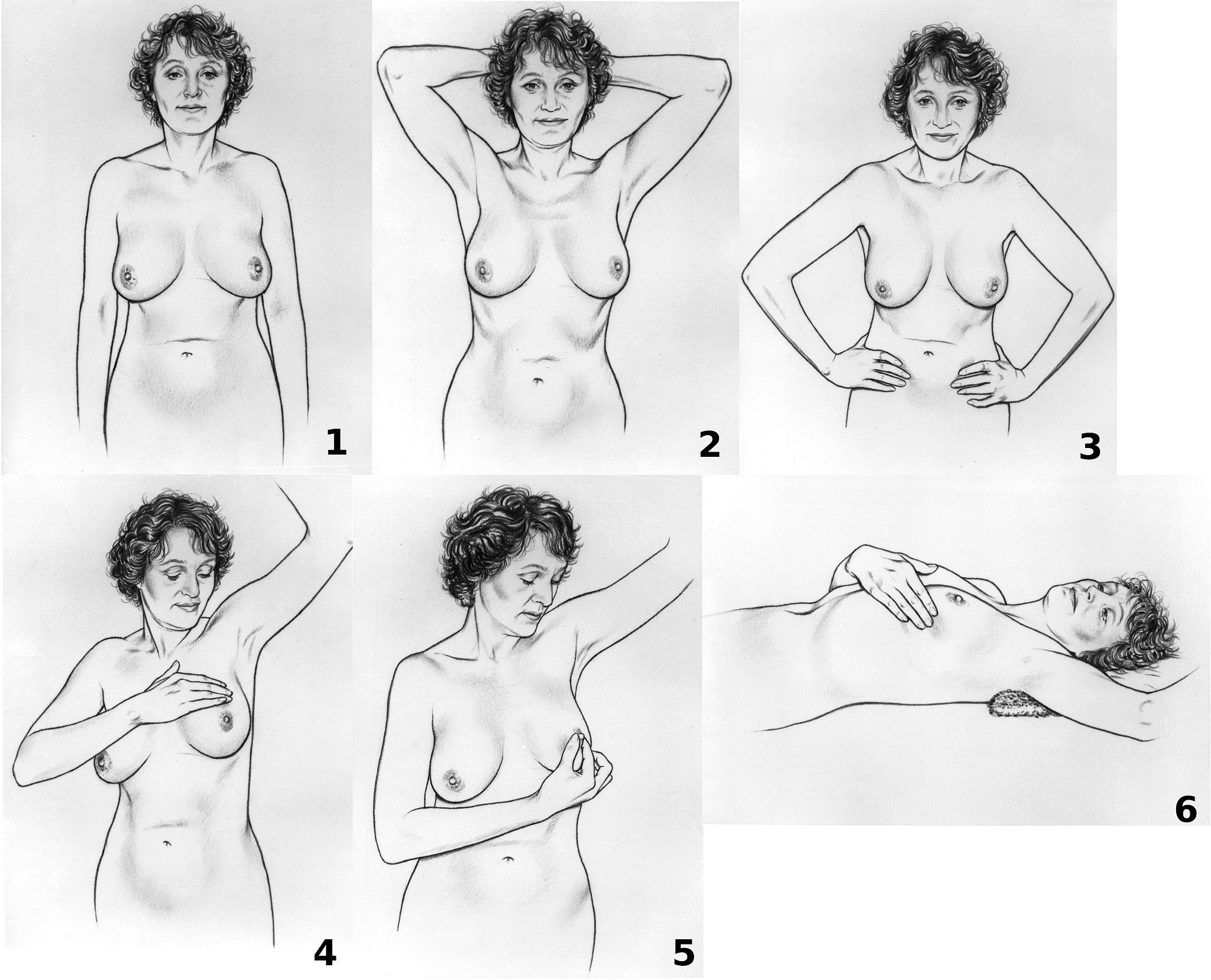
    The feature image is from Wikimedia Commons.

    Like my stories? Please subscribe.

    Introduction

    Before my first diagnosis, I was obsessive about breast self-exams. Every time I showered, I would check, feeling each part carefully. It was just part of my routine—not because I had any family history of cancer, but because of a high school health class. The nurse had brought in these dummy breasts with a “lump” we were supposed to find. I remember how I could never feel it, no matter how hard I tried. That really stuck with me. I was afraid that when it mattered, I wouldn’t feel anything.

    I missed the lesson on looking for changes, not just lumps. Now I can tell you everything you should be looking for in a breast self-exam – changes, not lumps. However, only days after seeing initial changes, I felt a lump. I thought it was a muscle strain at first, but it didn’t hurt and it didn’t go away. It wasn’t a muscle strain, it was a 4.5cm tumour in my left breast. 

    ~~~~ 2016 ~~~~

    It has been a year since my diagnosis and treatment for bilateral breast cancer. I no longer have breasts. I have fat tissue that was transplanted from my stomach to make forms that look like breasts. The breast-self exams I did before don’t make sense anymore. I have no breast tissue. But I also have no sensation, which comes with new risks. 

    One of my new risks is the cold. I have body parts now—my reconstructed breasts, my belly—that I can’t feel. They’re living flesh, warm to the touch, but numb. I have to relearn what “normal” feels like, but also how to check myself to make sure I’m not getting frostbite.

    I’m still exploring what a breast self-exam means for me now. This was how I found my cancer. I used to check every time I showered, and I saw the change almost immediately—a lump, and a strange discharge. But now, I don’t have breasts with breast tissue. My nipples are still there, but they don’t leak anymore. They’re unfeeling and unresponsive, but they’re warm to the touch.

    I still examine my chest, but I’m looking for something else. No lumps—just damage. I’m scanning my skin for signs of anything that could have happened without me noticing, because I can’t feel it.

    Part of my new normal is this constant exploration of my changed body. I trace the areas with no feeling, trying to find the boundaries—where sensation fades from something to nothing. I want to see if these boundaries shift. I’ve been told there’s a chance I might regain some feeling, but nerves can take up to three years to grow back. For now, I’m grateful it’s not winter. I’ll have at least a year or two, maybe more, before I need to think about what snow and freezing temperatures mean for my body.

    ~~~~ 2024 ~~~~

    I am used to my body. My urge to inspect it so closely fades. I stop any form of breast exam in the winter. Now, it’s during the warmer months that I need to check. Instead of worrying about frostbite, I’m prone to heat rash, especially under my breasts. I don’t feel it when it starts; I only notice it later, after it’s become severe. By the time I see it, it needs days of treatment—creams and patience—to calm down. I can’t always tell if the creams are working; I just wait for the rash to fade.

    I stopped looking for cancer years ago. Then came a regional recurrence, in my lymph nodes. They found it on a scan. I couldn’t feel the swollen nodes, even with a 2.5 cm tumour growing in the largest of the five cancerous nodes. My family doctor also could not feel it. That experience stripped away any faith I had in self-exams to detect recurrence. The familiar routine I once had, washing and inspecting my new breasts, has fallen by the wayside, offering no comfort now. All I can rely on are blood tests and scans.

    My new normal feels like my old normal. After a shower, I give myself a quick glance in the mirror, just to check if anything looks wrong. That’s it. I don’t dwell on it. There’s nothing left for me to find. A self-exam in the shower isn’t going to catch cancer if it comes back. So, unconsciously, and now consciously, I’ve moved on from that practice.

  • Letrozole – so far so good

    Letrozole – so far so good

    Back in October, when my oncologist and I agreed I was done with Herceptin, we decided I wouldn’t do anything but let my body heal until January. That’s when I’d give Letrozole a try.

    Stopping Herceptin felt like a relief. For the longest time, I couldn’t distinguish which symptoms were caused by chemo, radiation, COVID, or Herceptin itself. They all blurred together. Eventually, I realized Herceptin was the culprit behind two days of fatigue and flu-like symptoms after every infusion. A week later, my heels would crack so deeply they hurt—a pain that even special creams and heel socks barely managed. My nails became brittle and splintered at the slightest touch, and the skin on my thumbs cracked along the seams of my fingerprints. I’d resort to using crazy glue to hold them together.

    Even after moving from three-week to four-week infusions, I was miserable half the time. I couldn’t imagine continuing until the end of the year.

    My oncologist, who I respect for this wizdom and experience, left the decision up to me. “If the cancer comes back, will you regret stopping early?” he asked. I didn’t even hesitate: “No.” I’ve learned not to regret decisions made with the best information at hand. When my scans came back clear, I stopped Herceptin and allowed my body the time it needed to recover.


    When January arrived, I approached Letrozole with caution. My oncologist reassured me not to dwell on my past experience with hormone therapy. Back then, I started too soon—driven by fear—and as a pre-menopausal woman, the effects were far more severe. This time, I’m post-menopausal, and we’re taking things slow.

    Starting from a different place makes all the difference. It has been not quite two weeks. The initial main side effect: intense back and hip pain. It feels manageable, though, especially with regular exercise like boxing or walking. If I skip a workout, the pain catches up with me, and I crash, needing a 1–2-hour nap every few days.

    But I’ve turned this challenge into motivation. The fear of a sore back pushes me to lace up my shoes and move. I’ve even upgraded my headset for boxing, and I’m having a blast with it!

    As time has passed, the side effects seem to have diminished. That or the regular boxing is doing my body good. Perhaps both are true!

  • My first haircut

    My first haircut

    Last week I had my first post-chemo haircut. This time around, I have taken very few selfies. I really didn’t like how I looked as my hair was coming back. I also didn’t feel the same need to share pictures of me smiling. I didn’t have the same reasons for taking pictures.

    I waited as long as I could stand, but the hair was getting crazy. It has some curl but is also very frizzy. It stuck out on the sides and was long in the back. I dislike the feel of hair on my neck. Fortunately, I was able to find a good hairdresser to create something out of the mess that was my hair. I think she did an excellent job given what she had to work with. It isn’t the hair that I want, but it is much better than it was. I’m OK to be seen in public with it.

    I don’t remember the date of my surgery, but I’m pretty sure it has passed. I need to look it up – Wednesday August 23. That day came and went this year without me even noticing. It wasn’t the traumatic event that surgery was the first time. I can now say that I’ve been cancer free for one year.

    I’m still in treatment. I’m still taking herceptin. I have spaced out my treatments to every four weeks rather than three weeks. That seems to help reduce the side effects. They like to say that herceptin doesn’t have side effects, but that is compared to the stronger chemo meds that have crazy side effects. Herceptin makes me tired. I lag for a few days or even a week after taking it. Then I get back to normal and feel good until the next cycle. After today, only two more left.

    I don’t know yet what will come next. I thought maybe there would be a scan, but the oncology nurse tells me that in the absence of symptoms there are no scans. I am reminded of the last time I went through this. I hear of people with other cancers doing some kind of regular scan to ensure the cancer hasn’t come back. With beast cancer, if you don’t have any breasts, scans only occur if you have symptoms.

    Next week I’ll see my oncologist in person and we will talk about next steps. My hormone receptor levels were much lower than the first time I had cancer, so I don’t know if hormone therapy is going to be suggested. It was really hard for me the first time, so it isn’t something I’m looking forward to.

    As I enter into this year of ‘now what’, I have the tools I didn’t have the first time. I’m taking an online course to refresh my cognitive based therapy (CBT) tools. These have kept me sane throughout this journey. I also have my mantra, that I repeat whenever I start to worry “In the absence of a diagnosis, I am healthy”. I say it to myself regularly and it helps me stamp out unproductive and unnecessary worry. It lets me get on with my day and get out there and live. At this point in time, I am feeling strong and healthy.

css.php